
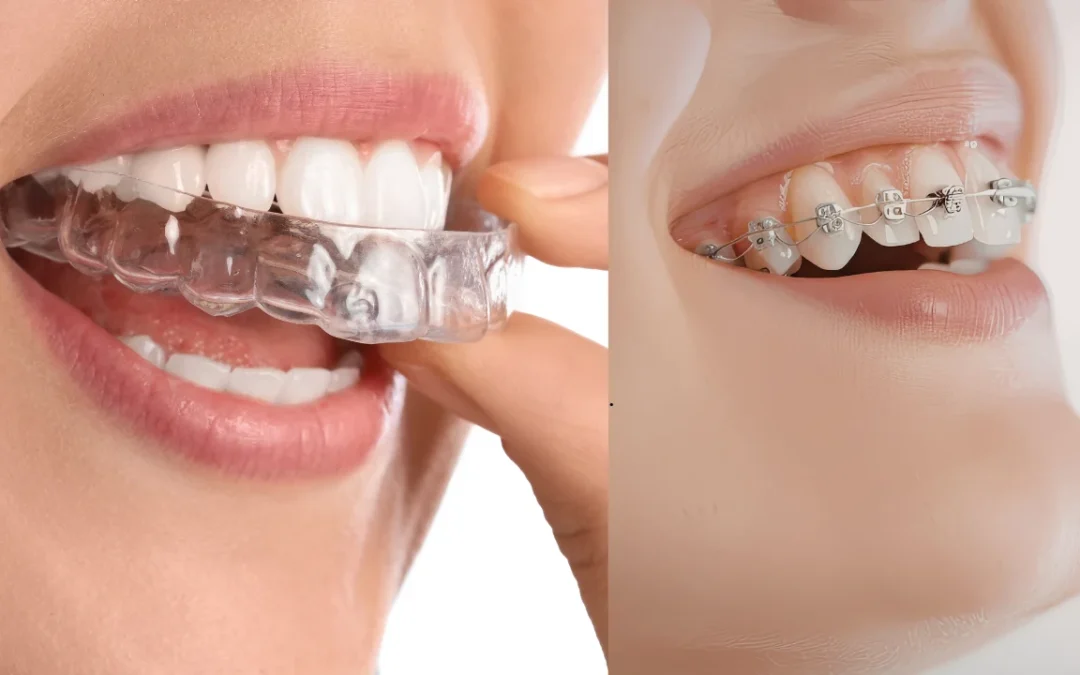
When it comes to straightening your teeth, there are two primary options: aligners and braces. Whether you’re dealing with crooked teeth, gaps, or a bite issue, the choice of treatment can feel overwhelming. With a wide range of treatments available, it’s important to understand the differences between aligners and braces so you can make an informed decision that aligns with your goals, lifestyle, and dental needs.
We’ll deep dive into clear aligners (like Invisalign®) and traditional braces, comparing their benefits and drawbacks to help you choose the best treatment for your smile. By the end of this post, you’ll have a clearer understanding of which treatment option suits your needs.
What Are Aligners?
Clear aligners are a modern alternative to traditional braces, offering a discreet and removable solution for straightening teeth. Made from smooth, transparent plastic, these aligners fit snugly over your teeth and gently move them into the correct position over time. Unlike braces, which are fixed to your teeth, aligners can be removed when eating, drinking, or brushing, making them a convenient option for people with busy lifestyles.
How Aligners Work
Aligners work by applying gradual pressure to your teeth to shift them into alignment. During your initial consultation, your orthodontist will take digital scans or impressions of your teeth, which are used to create a series of custom-made aligners that you will wear in a specific order. Each set of aligners is designed to move your teeth incrementally over a period of time, with new aligners provided every few weeks to continue the progress.
Aligners are highly effective for correcting a variety of dental issues, including:
- Crowded teeth
- Spacing issues
- Minor bite misalignment (overbite, underbite)
However, they are most effective for mild to moderate orthodontic cases. Severe issues may require traditional braces for optimal results.
What Are Traditional Braces?
Traditional braces are the most common orthodontic treatment, and they’ve been in use for decades. Unlike removable aligners, braces are fixed to your teeth using metal brackets and wires. The brackets are attached to your teeth with a special adhesive, and the wire is threaded through them and adjusted regularly to apply pressure, gradually moving the teeth into alignment.
How Braces Work
The brackets on braces are attached to your teeth and are connected by wires. Orthodontists adjust the wires periodically to ensure that they apply consistent pressure to the teeth, which shifts them into their proper positions over time. Braces are ideal for more severe dental issues, such as severe crowding, bite problems, or misalignment that require strong, continuous pressure to correct.
While aligners use removable trays, the underlying science of moving teeth is similar to traditional methods; you can learn more about how do braces work to see how pressure effectively reshapes your smile. Braces work well for a wide range of dental issues, including:
- Overcrowded teeth
- Bite issues (such as underbite, overbite, and crossbite)
- Severe misalignment or rotated teeth
- Jaw discrepancies
Braces are a proven solution that can effectively treat a wider range of issues compared to aligners, especially in complex cases. Braces are ideal for severe dental issues, such as severe crowding or jaw discrepancies. In some cases, crowding is caused or worsened by wisdom teeth, which your orthodontist will assess before beginning your treatment plan.
Aligners vs Braces: Key Comparisons
Compare the key factors that will influence your decision between aligners and braces.
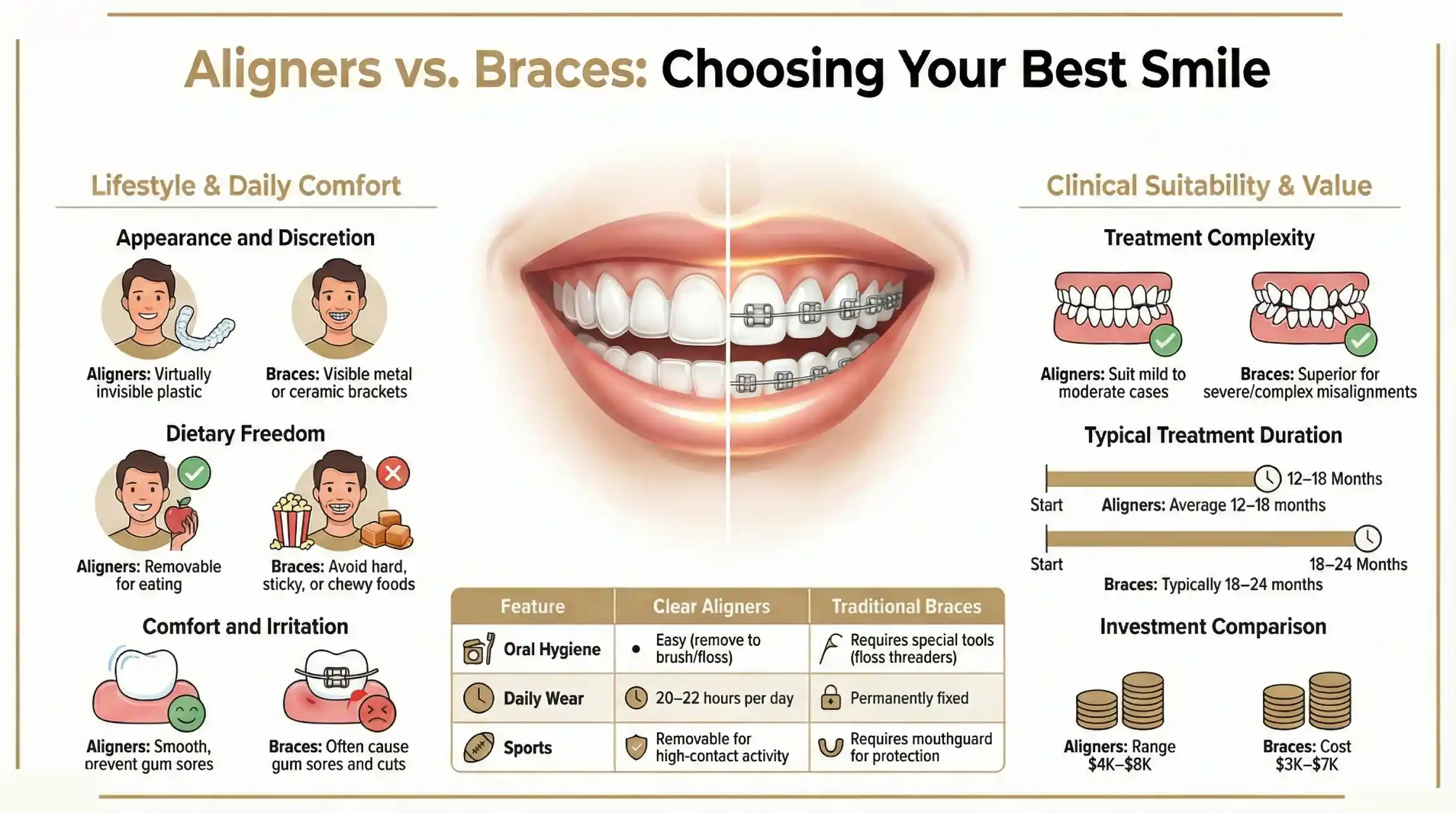
Appearance & Discretion
- Aligners: One of the most significant advantages of aligners is their discreetness. Aligners are virtually invisible, allowing you to straighten your teeth without drawing attention to your treatment. This is especially beneficial for adults or teenagers who may feel self-conscious about wearing visible braces.
- Braces: Traditional braces are more visible. The metal brackets and wires can be noticeable, although ceramic braces offer a more discreet option with clear or tooth-colored brackets. However, braces, regardless of the type, will still be noticeable in the mouth.
Comfort & Irritation
- Aligners: Clear aligners are made of smooth plastic and fit comfortably over the teeth. Unlike traditional braces, which can cause irritation to the gums, aligners are gentler on the mouth. The absence of metal components means no cuts or sores from brackets rubbing against the inner cheeks and lips.
- Braces: Braces are known for causing discomfort, especially after adjustments. The metal components of traditional braces can irritate the gums and the inside of the mouth, leading to sores or cuts. Orthodontic wax can be used to cover sharp edges, but it may still cause some discomfort until your mouth adjusts.
Effectiveness for Severe Cases
- Aligners: While aligners are effective for mild to moderate orthodontic issues, they are not the best solution for severe misalignment or bite issues. Aligners can struggle with moving teeth that require significant force or shifting.
- Braces: Braces are the go-to solution for severe dental issues. Their fixed nature allows for continuous and consistent pressure, which is essential for complex cases such as severe overcrowding, bite problems, or misaligned teeth.
Treatment Time
- Aligners: Treatment with aligners typically lasts anywhere from 12 to 18 months, depending on the complexity of your case. For mild to moderate issues, aligners can offer a faster treatment time than traditional braces.
- Braces: Traditional braces usually take 18 to 24 months to achieve the desired results. Treatment duration can vary based on the severity of your case, but for complex issues, braces can be the better option for efficient correction.
Maintenance & Hygiene
- Aligners: Since aligners are removable, they make oral hygiene easier. You can brush and floss your teeth as usual, without worrying about food getting stuck in brackets. However, you must clean your aligners regularly and avoid eating or drinking with them in to prevent staining.
- Braces: Braces require more effort in maintenance. You must clean around the brackets and wires to ensure no food gets stuck, which can lead to plaque buildup and cavities. Special tools like interdental brushes and floss threaders are often needed to maintain good hygiene.
Eating & Drinking Restrictions
- Aligners: One of the benefits of aligners is the ability to remove them when eating or drinking. This means there are no food restrictions, and you can enjoy your meals without worry.
- Braces: Traditional braces come with certain food restrictions. You must avoid hard, sticky, or chewy foods (like caramel, popcorn, or nuts) that can damage the braces or get stuck in the wires and brackets.
At Parramatta Green Dental, we specialize in providing both aligners and traditional braces. Our experienced orthodontists can help you determine which treatment is best for your smile.
Cost Comparison: Aligners vs Braces
When it comes to the cost of treatment, braces are generally more affordable than aligners. Traditional braces typically cost between $3,000 and $7,000 in Australia, depending on the type of braces you choose and the complexity of your case. Ceramic braces and lingual braces are more expensive, often ranging from $4,000 to $8,500. Clear aligners, like Invisalign®, can cost anywhere between $4,000 and $8,000, making them generally more expensive than metal braces.
The higher cost is primarily due to the customization and removability of aligners. However, some people are willing to pay the extra cost for the added convenience and aesthetic appeal. Keep in mind that insurance coverage may vary depending on your plan, and some dental practices offer payment plans to make treatment more affordable. For comparison, the dental implant cost for a single missing tooth can be significant, making early alignment a wise financial decision for your long-term health.
| Feature | Clear Aligners | Traditional Braces |
| Appearance | Nearly invisible | Visible, with metal or ceramic brackets |
| Comfort | Smooth, no irritation | Can cause irritation and discomfort |
| Treatment Duration | 12-18 months for mild/moderate cases | 18-24 months for complex cases |
| Maintenance | Easy to clean, remove when eating | Requires special tools to clean around brackets |
| Eating Restrictions | None (removable) | Avoid sticky, hard, or chewy foods |
| Cost | More expensive ($4,000 – $8,000) | More affordable ($3,000 – $7,000) |
| Suitability | Mild to moderate dental issues | Severe dental issues |
Who Should Choose Clear Aligners?
Clear aligners are best for individuals who have mild to moderate orthodontic issues and prefer a discreet treatment method. They are ideal for people who don’t mind wearing aligners for 20-22 hours per day and want the flexibility to remove them when eating, drinking, or brushing. Aligners are also a great choice for those who are conscious about their appearance and want to avoid the visibility of traditional braces.
If you are looking for a treatment that fits into your lifestyle without compromising on aesthetics, clear aligners may be the right choice. However, if you have severe dental issues, you may need to consider traditional braces for more effective treatment.
Who Should Choose Braces?
Traditional braces are the best option for individuals with severe dental problems that require strong, constant pressure to move the teeth. If you have severe overcrowding, bite problems, or jaw discrepancies, braces are likely your best bet. Braces are also ideal for children and teenagers who are less likely to follow the strict guidelines required for aligner treatment.
If you are dealing with complex orthodontic issues and need a reliable, long-term solution, braces can provide the best results. They may not be as aesthetically pleasing as aligners, but they are highly effective at treating a wide range of dental concerns.
Treatment Process: What to Expect
Aligners Treatment Process
The treatment process for clear aligners is relatively straightforward, but it does require several steps to ensure the best results. Here’s what you can expect:
- Initial Consultation: Your journey with clear aligners begins with a consultation with an orthodontist. During this visit, the orthodontist will assess your teeth, discuss your treatment goals, and determine if clear aligners are suitable for you. You’ll also discuss any concerns about the process and expected outcomes.
- Digital Impressions/Scans: After the initial consultation, the orthodontist will take digital impressions or scans of your teeth to create a custom treatment plan. These impressions are sent to a laboratory, where your aligners will be made.
- Receiving Your Aligners: Once your aligners are ready, you will receive a set of custom-made trays. Your orthodontist will provide you with clear instructions on how to wear them and how often you need to change them. Typically, each set is worn for one to two weeks before moving on to the next set in the series.
- Regular Check-ups: Every 6-8 weeks, you will visit your orthodontist for a check-up. During these visits, your progress will be monitored, and any necessary adjustments will be made. Your orthodontist will ensure that your aligners are fitting correctly and that your teeth are moving as planned.
- Final Stages and Retainers: After you’ve completed your aligner series, your orthodontist will assess your results. At this stage, retainers are often recommended to help maintain the newly straightened teeth. These can be either clear retainers or metal retainers, depending on your needs.
Braces Treatment Process
The treatment process for traditional braces is more involved but highly effective for complex dental issues. Here’s what to expect when choosing braces:
- Initial Consultation: As with aligners, the first step for braces treatment is a consultation with an orthodontist. This will involve a thorough evaluation of your teeth and bite to determine if braces are the best treatment option for your needs.
- Bracket and Wire Placement: During the next appointment, your orthodontist will place brackets on your teeth. The brackets are glued to your teeth, and wires are threaded through them. This is the initial setup of your braces, and the process can take a couple of hours.
- Regular Adjustments: Every 4-6 weeks, you will visit your orthodontist to have your braces adjusted. During these visits, the wires will be tightened, and the rubber bands may be replaced. These adjustments ensure that your teeth continue to move in the desired direction.
- Retention Phase: Once your orthodontist determines that your teeth have aligned properly, the braces will be removed. This is typically around the 18-24 month mark, but it can vary based on the severity of your case. After braces removal, you will need to wear a retainer to keep your teeth in place and prevent them from shifting back.
Lifestyle Considerations: Aligners vs Braces
Eating & Drinking
One of the most significant advantages of clear aligners is that they are removable, which allows you to enjoy your meals without any restrictions. You can simply take the aligners out when eating or drinking, making them much more convenient compared to traditional braces. However, it is important to note that aligners must be cleaned after every meal to avoid the buildup of bacteria or food particles.
Braces, on the other hand, require more careful attention when eating. You’ll need to avoid certain sticky, hard, and chewy foods like gum, popcorn, and caramel, as these can damage the braces or get stuck in the wires. Eating certain foods can also increase the likelihood of plaque buildup, so brushing after every meal is essential to keep your teeth clean.
Sports & Physical Activity
For those who are active in sports, aligners are an excellent option because they can be removed before any physical activity. This eliminates the risk of the aligners causing discomfort or injury during sports. Additionally, since they don’t have any metal components, they’re much more comfortable for athletes who participate in high-contact sports.
Braces, on the other hand, can cause discomfort during physical activities, and mouthguards are required for protection. The metal brackets and wires can also increase the risk of injury if you experience a blow to the mouth. It’s important to wear a mouthguard during sports to protect both your braces and your teeth.
Oral Hygiene
With clear aligners, it’s easier to maintain good oral hygiene because you can simply remove the aligners to brush and floss your teeth as usual. You don’t need any special tools or techniques to clean your teeth, making it a convenient option for maintaining your oral health.
Braces require more effort in maintenance, as food particles can easily get trapped. If not cleaned properly, these trapped particles can contribute to what causes teeth to decay, potentially leading to cavities during your orthodontic journey.
Final Thoughts: Which Option Is Right for You?
Choosing between clear aligners and braces depends largely on your dental needs, aesthetic preferences, and lifestyle. Here’s a summary to help you make the best decision:
- Clear aligners are best for individuals with mild to moderate orthodontic concerns who want a discreet, removable, and comfortable solution. Aligners are ideal for people who are willing to wear them for 20-22 hours a day and prefer a more flexible approach to eating and oral hygiene.
- Braces are better suited for those with complex dental issues, such as severe overcrowding, bite problems, or misalignment. They are fixed and do not require the same level of compliance as aligners, but they may be more noticeable and require careful maintenance.
At Parramatta Green Dental, we offer both aligners and braces to help you achieve a straighter smile. Our experienced orthodontists will guide you through the process and create a personalized treatment plan that suits your needs. If you’re ready to start your orthodontic journey, contact us today to schedule a consultation.
Frequently Asked Questions (FAQs)
1. Which is better: aligners or braces?
There is no one-size-fits-all answer. Aligners are better suited for mild to moderate orthodontic issues, offering a discreet treatment that is removable and more comfortable. Braces are a better option for individuals with severe dental concerns as they provide more consistent pressure for complex cases like severe misalignment, bite issues, or overcrowding.
2. How long does treatment take with aligners vs braces?
Treatment with aligners typically lasts between 12 to 18 months for mild to moderate cases, but this can vary depending on individual progress. Braces usually require 18 to 24 months for more complex cases. The exact duration depends on the severity of the dental issues being treated and how well you follow your orthodontist’s instructions.
3. Can I eat with aligners in?
No, aligners must be removed before eating or drinking anything other than water. This is to prevent food from getting trapped in the aligners, which could cause staining or damage. With braces, you need to avoid certain foods like sticky, hard, or chewy items, as they can damage the brackets or get stuck in the wires.
4. Are clear aligners more expensive than braces?
Yes, clear aligners, such as Invisalign®, are generally more expensive than traditional braces. Aligners range from $4,000 to $8,000, while metal braces typically cost between $3,000 and $7,000. However, the cost can vary depending on the complexity of your treatment, and some insurance plans may cover a portion of the treatment.
5. Do aligners work for everyone?
While aligners are effective for many people, they are generally best for individuals with mild to moderate dental issues. Severe misalignment, bite problems, and complex cases may require traditional braces to achieve the best results. Your orthodontist will evaluate your dental needs and help you determine whether aligners are the right choice for you.