
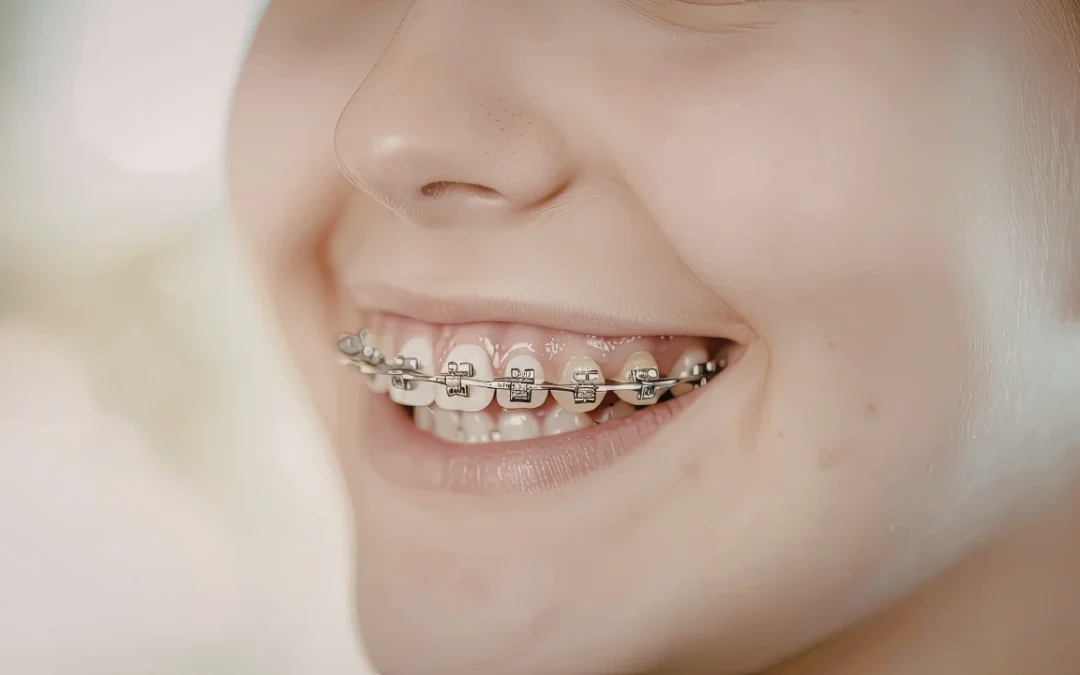
Choosing the right type of braces is a big decision for anyone looking to improve their smile. When considering metal braces versus ceramic braces, it’s essential to weigh the benefits and drawbacks of each. Both types of braces are designed to straighten teeth, but the choice between them depends on several factors, including aesthetic preferences, treatment complexity, cost, and comfort. This guide will help you understand the key differences between metal and ceramic braces and which one might be the best option for your unique needs.
What Are Ceramic Braces?
Ceramic braces are a popular alternative to traditional metal braces. They function in much the same way, using brackets and wires to gradually shift your teeth into better alignment. The key difference is that the brackets are made from a tooth-colored ceramic material, which makes them much less noticeable than the typical metal brackets. Ceramic braces are ideal for individuals who want the benefits of braces without the visibility of metal.
While the wires themselves may still be visible, the overall appearance is more discreet, making ceramic braces a preferred option for adults and teens who are concerned about the aesthetics of wearing braces. However, ceramic braces can be more fragile and require more careful handling compared to metal braces.
What Are Metal Braces?
Metal braces are the traditional and most common type of braces used to correct misalignment and bite issues. These braces consist of stainless steel brackets attached to your teeth, with nickel-titanium wires that apply consistent pressure to move teeth into their desired positions. Metal braces are known for their strength and effectiveness, especially when dealing with more complex dental issues such as severe overcrowding or bite problems.
They are durable and often the most affordable option for those looking for orthodontic treatment. While metal braces are highly effective, their main downside is their visibility; many people find the shiny silver appearance noticeable, which can be a concern for those who prefer a more discreet treatment option.
Choosing Between Ceramic and Metal Braces
Orthodontic treatment can be a life-changing decision. Whether you’re a teenager or an adult, choosing the right type of braces is the first step toward a better smile. Braces are used to correct misaligned teeth, bite issues, and other dental concerns. The two most popular types of braces are metal braces and ceramic braces. Both are effective at straightening teeth, but they come with their own set of pros and cons. If you are curious about the mechanics of how braces work, to understand the biological changes that allow teeth to move.
When choosing between ceramic and metal braces, many patients prioritize factors like visibility, comfort, treatment speed, and cost. While metal braces are the traditional option and are highly durable, ceramic braces offer a more discreet alternative. Understanding which braces are best suited to your needs will depend on the severity of your dental issues, your lifestyle, and your aesthetic preferences.
Pros and Cons: Side-by-Side Comparison
Pros of Metal Braces
Metal braces have been around for decades and are still one of the most popular choices for orthodontic treatment. Let’s dive deeper into their advantages and limitations:
Strength and Durability
Metal braces are known for their durability. They can handle the high pressures required to treat severe orthodontic issues like bite problems, severe overcrowding, and misalignment. Whether you’re dealing with an underbite or overbite, metal braces can effectively move teeth into their correct positions.
Affordable
Metal braces are typically the most affordable option. While the cost can vary depending on the complexity of the case and the orthodontist’s fees, they are generally more budget-friendly compared to ceramic braces. This is an important factor for families and individuals looking for cost-effective solutions.
Effective for Severe Cases
If your misalignment or bite issue is complex, metal braces are often the most effective solution. They can handle the necessary pressure to achieve faster results in difficult cases, making them ideal for patients with severe dental concerns.
Cons of Metal Braces
Visibility
The biggest downside to metal braces is their visibility. The shiny, silver brackets and wires can be quite noticeable, especially for adults who may feel self-conscious about their appearance during treatment. If you’re someone who is concerned about the aesthetics, this may be a dealbreaker.
Oral Discomfort
Metal brackets can cause irritation and sores inside the mouth, particularly after being installed. While this is usually temporary, knowing a few methods for toothache relief and gum soothing can help you manage the initial transition period more comfortably.
Strict Maintenance
Metal braces require strict oral hygiene practices. Food particles can easily get trapped between the brackets and wires, leading to plaque buildup and potential tooth decay. You’ll need to brush your teeth after every meal and floss carefully to keep your mouth clean during treatment.
Pros of Ceramic Braces
Ceramic braces provide a more aesthetically pleasing option while still offering the benefits of traditional braces. But like anything, they come with their own set of pros and cons.
Aesthetic Appeal
Ceramic braces are much less visible than metal braces. The tooth-colored brackets blend in with your natural teeth, which makes them a more discreet option. This is especially important for adults and teens who may be concerned about the appearance of traditional metal braces.
Effective Treatment
Ceramic braces can handle a variety of dental issues, including misalignment, gaps, and bite problems. While they may not be as strong as metal braces for complex cases, they are still a very effective treatment option for mild to moderate dental issues.
Confidence Boost
Many patients feel more confident during their treatment with ceramic braces. Since they are less noticeable, patients are often more comfortable in social situations, which can help reduce the stress or self-consciousness that some may feel with metal braces.
Cons of Ceramic Braces
Fragility
Ceramic braces are more delicate than their metal counterparts. If a bracket breaks or if you accidentally damage a tooth while wearing them, you may need chipped teeth repair to restore the tooth’s structure and ensure your orthodontic treatment stays on track.
Cost
Ceramic braces are generally more expensive than metal braces due to the materials and extra care required during treatment. While this may not be a concern for some, the higher cost could be a factor to consider, especially if you’re on a budget.
Staining Risk
The brackets themselves may be tooth-colored, but the elastic ties or ligatures that hold the archwire in place are more prone to staining. If you eat certain foods like coffee, curry, or red wine, these elastics may discolor, which can affect the overall appearance of the braces.
Comparing Metal Braces vs Ceramic Braces
Now that we’ve covered the key differences in the two types of braces, let’s break them down side-by-side in a comparison table:
| Feature | Metal Braces | Ceramic Braces |
| Material | Stainless steel, nickel-titanium | Polycrystalline alumina, translucent composite |
| Visibility | Very visible | Tooth-colored, less noticeable |
| Strength | Highly durable, strong | More fragile, prone to chipping |
| Staining | None | Risk of staining elastics/ligatures |
| Treatment Speed | Often faster, especially for complex cases | May be slower due to gentler forces |
| Cost | More affordable | Higher due to materials and repairs |
| Suitability | Suitable for all cases, especially complex ones | Best for mild to moderate cases |
Key Factors in Choosing the Right Braces
Choosing between metal braces and ceramic braces ultimately comes down to a few critical factors that depend on your specific needs, budget, and lifestyle. Here are the key aspects to consider when making your decision:
Severity of Your Case
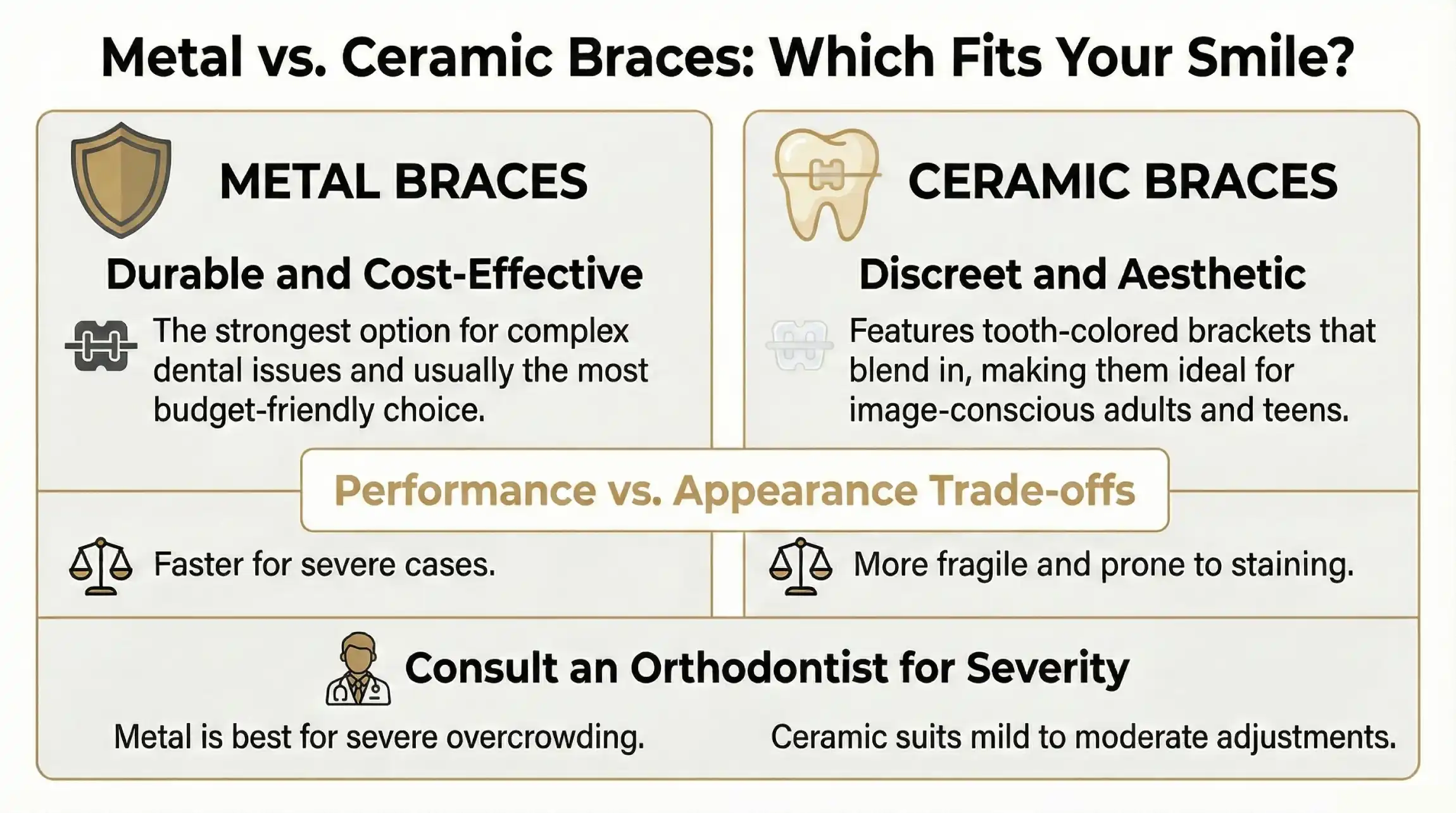
- Metal Braces: If you have complex dental issues, such as severe overcrowding, bite problems, or significant misalignment, metal braces are typically the better choice. Their durability and strength allow them to apply the necessary pressure to treat severe cases more efficiently.
- Ceramic Braces: Ceramic braces work well for people with mild to moderate dental issues. If your concerns are more cosmetic, such as crooked teeth or slight misalignment, ceramic braces might be sufficient for your needs. However, for more complex cases, metal braces are likely the better option.
Aesthetic Preferences
- Metal Braces: For those who don’t mind the visibility of their braces or who want to add a bit of personality with colored bands, metal braces can be a fun and practical option. However, they might not be the best choice for adults or image-conscious individuals.
- Ceramic Braces: Ceramic braces are the better option if discretion is important to you. They blend more naturally with your teeth, offering a more subtle appearance. For people who don’t want their braces to be the focal point of their smile, ceramic braces are an ideal solution.
Comfort
- Metal Braces: Metal braces are generally strong and reliable, but they can cause discomfort, especially during adjustments. The metal brackets can irritate the inside of the mouth, causing sores or ulcers.
- Ceramic Braces: While ceramic braces are less irritating to the gums than metal braces, they are still rigid and can cause discomfort, especially in the first few days of wear. The ceramic material, however, is smoother than metal, and many find it more comfortable over time.
Cost and Insurance Coverage
- Metal Braces: Metal braces are often the most affordable option for orthodontic treatment, and they are typically covered by most insurance plans. If cost is a major consideration, metal braces provide an effective solution at a lower price point.
- Ceramic Braces: Ceramic braces are more expensive due to the materials used. The cost can vary depending on the clinic and the complexity of your case, but they are generally more costly than metal braces. Additionally, some insurance providers may not cover ceramic braces to the same extent.
Treatment Duration
- Metal Braces: Once the metal brackets and wires are installed, adjustments are typically made every 4-6 weeks to ensure your teeth are shifting properly.
- Ceramic Braces: The fitting and adjustment process for ceramic braces is similar, though special care must be taken to ensure the brackets are not damaged or stained during the treatment.
For personalized advice, it’s essential to consult with an orthodontist who can evaluate your dental needs and help you make the best decision for your smile. At Parramatta Green Dental, our team of experts can guide you through the decision-making process and provide top-notch orthodontic care tailored to your needs.
Who Are the Best Candidates for Metal Braces?
Metal braces are the best option for individuals with severe orthodontic issues, such as misaligned bites (overbite, underbite, crossbite), extreme overcrowding, or other complex dental concerns. These braces are ideal for teens, children, and adults who require strong, durable braces capable of applying consistent pressure to move teeth efficiently.
Metal braces are also cost-effective and often covered by insurance, making them an affordable option for those needing significant dental correction. They work well for complex cases and can provide faster results for individuals with time-sensitive orthodontic needs.
Who Are the Best Candidates for Ceramic Braces?
Ceramic braces are an excellent choice for individuals seeking a more discreet option while still needing effective treatment. They are ideal for adults and teens with mild to moderate dental issues, such as crooked teeth, gaps, or minor bite problems. Ceramic braces provide an aesthetic advantage due to their tooth-colored appearance, making them less noticeable than metal braces.
However, they are best suited for individuals who don’t have severe misalignment and prefer a less visible treatment option. Ceramic braces are a good balance between aesthetics and efficiency, but they may not be the best choice for complex cases that require quicker results.
Maintenance and Care: Keeping Your Braces in Top Shape
Proper care and maintenance are essential for ensuring that your braces work effectively and that your treatment progresses smoothly. Whether you opt for metal braces or ceramic braces, maintaining good oral hygiene is crucial to avoid complications during treatment.
Oral Hygiene Tips for Both Types of Braces
- Brush your teeth after every meal to remove food particles from around the brackets and wires.
- Floss carefully using specialized tools like floss threaders or interdental brushes to clean between the brackets.
- Use mouthwash to help prevent plaque buildup and reduce the risk of cavities.
Specific Care for Ceramic Braces
- Ceramic braces require more attention to prevent staining. While the brackets themselves are less likely to stain, the elastic bands used to secure the wires can discolor over time.
- Avoid staining foods like coffee, tea, curry, and red wine. If you consume these, make sure to rinse your mouth immediately or replace your elastic bands regularly.
Foods to Avoid
Both metal and ceramic braces require avoiding certain foods to prevent damage:
- Hard foods (nuts, ice)
- Sticky foods (chewing gum, caramel)
- Sugary foods and drinks can cause plaque buildup
Frequently Asked Questions (FAQs)
Which is better: Metal or Ceramic Braces?
Metal braces are ideal for severe orthodontic issues and are more cost-effective. They are highly durable and provide fast results for complex dental concerns. Ceramic braces are better suited for individuals who want a more discreet appearance and are dealing with mild to moderate dental issues.
Are ceramic braces as effective as metal braces?
Yes, ceramic braces are just as effective at straightening teeth as metal braces, but they are generally used for less complex cases. For severe misalignment or bite problems, metal braces may be more efficient due to their ability to apply greater force.
How long do ceramic and metal braces take to straighten teeth?
Metal braces usually work faster, especially for complex issues, and typically take 18-24 months. Ceramic braces, on the other hand, might take a bit longer due to gentler pressure applied to the teeth.
Can I eat with ceramic braces?
Yes, you can eat with ceramic braces, but you should avoid hard and sticky foods like nuts, caramel, and ice, which could damage the brackets. It’s also important to avoid foods and drinks that can stain the elastic bands.
Are ceramic braces as visible as metal braces?
No, ceramic braces are much less noticeable because they are made from tooth-colored materials. However, the elastic bands around the brackets may still be visible, and these can stain over time if not properly cared for.
Final Thoughts: Which Type of Braces Is Right for You?
Choosing between metal braces and ceramic braces depends on various factors, including the severity of your orthodontic needs, your budget, and your aesthetic preferences. Both types of braces are effective, but the right choice for you will depend on a few key factors.
- Metal Braces: Best for severe dental issues and individuals who want a cost-effective solution. They are durable, effective, and faster for complex cases.
- Ceramic Braces: Perfect for individuals who want a discreet, aesthetic option for mild to moderate misalignment. While they come at a higher cost and require extra care, they are ideal for patients who prefer not to have visible braces.
Remember, there is no universal “best” choice when it comes to braces. The right treatment for you should be based on your unique dental concerns and personal preferences. For a personalized consultation, where we can discuss your orthodontic goals and recommend the best solution, contact Parramatta Green Dental today. Our team of experienced orthodontists is here to guide you through the decision-making process and help you achieve a smile that you’ll love!