

When it comes to dental restorations, choosing the right type of filling can be overwhelming. You may have heard of resin-bonded fillings and traditional fillings (like amalgam and gold), but what’s the difference? More importantly, which one is right for your dental needs?
Whether you’re dealing with a cavity in your front tooth or a molar, selecting the appropriate filling plays a major role in your dental health, aesthetics, and long-term comfort. Resin-bonded fillings are known for their natural look and minimal invasiveness, while traditional fillings have been the standard for durability and strength.
We will explain the key differences, pros and cons, costs, and procedures associated with resin-bonded fillings versus traditional fillings, helping you make an informed decision about which option is best for you.
What Are Resin-Bonded Fillings?
Resin-bonded fillings, also known as composite fillings, are made from a mixture of plastic resins and fine glass or quartz particles. These fillings are designed to match the natural colour of your teeth, making them a popular choice for people who want to maintain the appearance of their smile while also treating cavities.
The material is applied directly to the cavity in layers, where it bonds chemically to the tooth. Once the resin is placed, it is hardened using a special curing light, ensuring a tight seal with the tooth and preventing further decay. The filling is then polished to blend seamlessly with the surrounding tooth structure.
What Are Traditional Fillings?
Traditional fillings include materials such as amalgam, gold, and silver. These materials have been used in dentistry for decades and are known for their durability and strength. However, they are often more visible than composite fillings and may not be as desirable for front teeth.
- Amalgam Fillings: Made from a blend of silver, mercury, tin, and copper, amalgam fillings are known for their durability and are often used for back teeth where strength is a priority.
- Gold Fillings: These are made from gold alloy and are highly durable, making them ideal for large cavities or molars. Gold fillings can last many years and are less likely to wear down over time.
- Silver Fillings: These are similar to amalgam fillings but often use a slightly different metal blend. Like amalgam, silver fillings are typically used for back teeth.
Composition and Material Differences
Material Used in Resin-Bonded Fillings
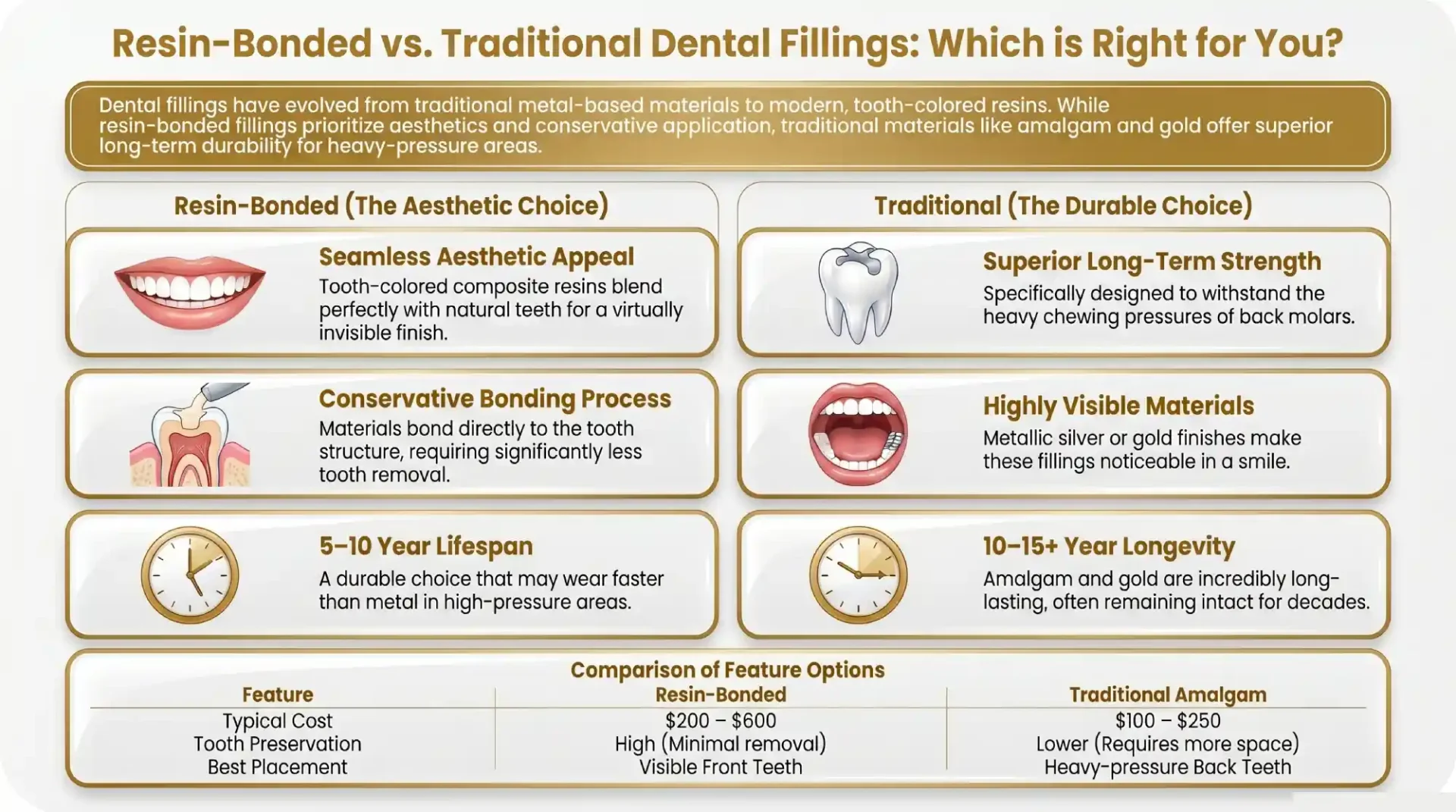
Resin-bonded fillings are made from tooth-coloured materials that blend seamlessly with the natural shade of your teeth. These materials include composite resins and glass ionomer resins, which provide both aesthetic appeal and durability. Resin-bonded fillings are ideal for visible areas, such as front teeth, where cosmetic appearance is essential.
One of the most attractive aspects of resin fillings is their ability to bond directly to the tooth structure, requiring minimal tooth removal. This makes the procedure less invasive compared to traditional fillings. Resin fillings also have a lower risk of fracturing over time when compared to older materials like amalgam.
Material Used in Traditional Fillings
Traditional fillings, such as amalgam (a silver-colored mixture of metals) and gold, have been used for decades. Amalgam fillings are known for their strength and durability, making them ideal for back teeth, which endure the heavy pressures of chewing. However, aesthetic concerns arise with amalgam fillings, as their metallic appearance is quite noticeable, especially for front teeth. Gold fillings, on the other hand, are extremely durable and long-lasting but can be expensive. These fillings are often reserved for molars that experience heavy chewing forces.
The primary downside of traditional fillings, particularly amalgam, is that they may require more tooth removal to make space for the filling, as the material does not bond directly to the tooth like resin. Additionally, amalgam contains mercury, which has raised concerns about environmental impact and biocompatibility, although it’s widely considered safe by most dental associations.
Procedure Comparison: How are Resin-Bonded and Traditional Fillings Applied?
Application Process of Resin-Bonded Fillings
The application of a resin-bonded filling is generally a quicker and simpler process compared to traditional fillings. Here’s what you can expect during the procedure:
- Cleaning and Preparation: The dentist will first remove the decayed part of the tooth.
- Bonding: A layer of resin material is applied to the cleaned cavity. This material is then hardened using a special curing light.
- Shaping and Polishing: Once the resin hardens, the dentist will shape it to match the contours of your natural tooth and polish it for a smooth finish.
Resin-bonded fillings require minimal tooth removal, and the material bonds directly to the tooth, providing a secure fit. This also helps preserve more of the natural tooth structure.
Application Process of Traditional Fillings
The process for placing traditional fillings is slightly more involved:
- Cleaning and Preparation: The dentist removes the decayed portion of the tooth. For amalgam fillings, more tooth structure may need to be removed to ensure a good fit.
- Filling the Cavity: For amalgam fillings, the material is packed into the cavity and shaped to fit the tooth. Gold fillings are usually crafted outside the mouth and then cemented into place.
Polishing: After the filling is set, the dentist will polish the surface of the tooth to ensure it functions well with your bite.
Traditional fillings, particularly amalgam, may require more tooth removal to make room for the material. The application process for gold fillings also involves an additional step of creating a custom restoration, making it a more time-consuming procedure.
Durability and Longevity: Which Type of Filling Lasts Longer?
Durability of Resin-Bonded Fillings
Resin-bonded fillings are durable, but they generally have a shorter lifespan compared to traditional fillings. Typically, resin fillings can last anywhere from 5 to 10 years. The longevity of the filling depends on factors such as oral hygiene, the size of the filling, and the type of resin used. Resin fillings tend to wear down faster than traditional fillings, especially in areas that experience significant chewing pressure.
One of the benefits of resin fillings is that they are less prone to cracking compared to amalgam fillings, but they may chip or wear in the long term, particularly in molars that handle heavy biting forces.
Durability of Traditional Fillings
Traditional fillings like amalgam and gold are incredibly durable and can last 10 to 15 years, or even longer with proper care. Amalgam fillings are ideal for back teeth due to their ability to withstand chewing forces. Gold fillings are the most durable option and are considered a long-term solution, often lasting for decades.
However, amalgam fillings have the disadvantage of expanding and contracting with temperature changes, which can sometimes cause the tooth to crack over time. Gold fillings, while durable, are more expensive than resin fillings and less aesthetically pleasing in visible areas.
Aesthetic and Cosmetic Appeal: Resin Bonded vs Traditional Fillings
Aesthetic Benefits of Resin-Bonded Fillings
Resin-bonded fillings are the go-to choice for patients seeking a cosmetic solution. Since resin fillings are tooth-colored, they blend seamlessly with your natural teeth, making them virtually invisible. This makes them ideal for front teeth, where aesthetics are crucial.
Resin fillings are also perfect for smaller cavities in the anterior teeth because they preserve more of the natural tooth structure. For those who want a natural look without compromising the strength of their restoration, resin-bonded fillings are the best choice.
Aesthetic Drawbacks of Traditional Fillings
On the other hand, traditional fillings, such as amalgam, are highly visible due to their metallic colour. For front teeth, amalgam fillings are typically not a preferred choice, as they can significantly affect the appearance of your smile. Gold fillings are an excellent aesthetic choice for molars, but they are not ideal for visible areas due to their bright yellow colour.
While gold fillings are durable and highly functional, they are expensive and may be a concern for patients concerned about the appearance of their teeth. For a more cosmetic solution, many patients opt for resin-bonded fillings in visible areas and traditional fillings in back teeth, where aesthetics are less of a concern.
Cost Comparison: Resin Bonded Fillings vs Traditional Fillings
Cost of Resin Bonded Fillings
Resin-bonded fillings are typically more expensive than traditional fillings like amalgam due to the materials used and the aesthetic appeal. The cost of resin-bonded fillings can range from $200 to $600, depending on the size of the cavity and the type of resin used. While resin fillings are costlier, many people are willing to pay the Premium for the natural look and minimal tooth removal that they offer.
Cost of Traditional Fillings
In comparison, traditional fillings, especially amalgam, are generally more affordable. The cost of amalgam fillings typically ranges from $100 to $250, depending on the size of the cavity and the location of the tooth. Gold fillings, however, can cost significantly more, ranging from $500 to $1,500 or more, depending on the complexity and the type of gold used.
Although amalgam fillings are less expensive upfront, they may not be the best option for patients looking for aesthetic solutions, especially for front teeth. However, for molars or back teeth, amalgam remains a reliable and cost-effective option.
Sensitivity and Comfort: What to Expect with Resin Bonded vs Traditional Fillings
Comfort with Resin Bonded Fillings
One of the significant advantages of resin-bonded fillings is their comfort. Since resin materials bond directly to the tooth, they create a more secure fit and are less likely to cause temperature sensitivity. After the procedure, most patients report minimal discomfort, and the tooth feels very natural.
Unlike amalgam fillings, which can sometimes cause sensitivity to hot and cold foods, resin fillings are less likely to lead to these issues. However, some patients may experience mild sensitivity immediately after the filling, especially if the cavity was large. This sensitivity generally fades within a few days.
Moreover, resin fillings are less prone to shrinking or expanding when exposed to temperature fluctuations, which can be a concern with traditional fillings like amalgam. This means that patients with resin-bonded fillings are less likely to experience discomfort caused by these changes.
Comfort with Traditional Fillings
In contrast, traditional fillings like amalgam can sometimes cause discomfort due to their metallic nature. Amalgam fillings can cause temperature sensitivity, especially in the back teeth, where chewing forces are greater. Patients with amalgam fillings may experience increased sensitivity to hot and cold for a while after the procedure.
Additionally, because amalgam is a metal that does not bond directly to the tooth, it can create a gap between the filling and the tooth, which may lead to discomfort or tooth sensitivity over time. Furthermore, amalgam fillings can expand or contract with temperature changes, sometimes causing cracks or fractures in the tooth, which may require additional treatment or replacement.
Gold fillings are more comfortable than amalgam but are still prone to similar sensitivity issues. However, gold fillings offer greater comfort and durability, especially in back teeth, which experience greater chewing pressure.
Maintenance and Care: Which Filling Requires More Attention?
Maintenance for Resin-Bonded Fillings
Resin-bonded fillings require routine care to maintain their longevity. Unlike traditional fillings, which may need replacement less frequently, resin fillings may wear down faster, especially in molars subjected to heavy chewing forces. To maintain a resin-bonded filling, you should:
Avoid chewing on hard foods or ice.
- Regularly brush and floss to maintain the health of the tooth and the filling.
- Schedule routine dental check-ups to monitor the filling’s condition and ensure it remains intact.
- If you have front teeth restorations, resin fillings are low-maintenance and typically do not stain easily. However, larger fillings or those exposed to excessive wear may require replacement after 5 to 10 years.
Maintenance for Traditional Fillings
Traditional fillings like amalgam and gold tend to require less maintenance over time. Amalgam fillings are highly durable and can last for 10 to 15 years or more with minimal care. However, they may require replacement if they crack, especially with age or excessive chewing stress.
Gold fillings also require minimal maintenance due to their durability and biocompatibility. While they may not require frequent replacements, it’s important to schedule regular check-ups to ensure the filling remains intact and doesn’t cause any irritation.
At Parramatta Green Dental, we offer both aesthetic and durable filling options, and our expert team is ready to help you determine the best choice for your unique needs.
Pros and Cons: Resin Bonded vs Traditional Fillings
Pros of Resin Bonded Fillings
- Aesthetic appeal: Blends seamlessly with natural teeth.
- Minimal tooth removal required.
- Ideal for front teeth and smaller cavities.
- Less sensitivity compared to traditional fillings.
- Biocompatible and environmentally friendly.
Cons of Resin-Bonded Fillings
- Less durable than traditional fillings in molars.
- More expensive due to material costs.
- May require replacements sooner than traditional fillings, especially in high-stress areas.
Pros of Traditional Fillings
- Durable and long-lasting, especially for molars.
- Cost-effective for back teeth and larger cavities.
- Amalgam fillings are strong enough to handle heavy chewing forces.
- Gold fillings are biocompatible and provide a long-term solution.
Cons of Traditional Fillings
- Visible in front teeth, causing aesthetic concerns.
- Mercury content in amalgam fillings raises environmental concerns.
- More tooth removal is required compared to resin fillings.
Making the Right Choice for Your Dental Health
Choosing between resin-bonded fillings and traditional fillings ultimately depends on your cosmetic goals, dental needs, and budget. Resin-bonded fillings are ideal for front teeth due to their natural appearance, while traditional fillings like amalgam and gold are more suited for molars that need extra durability.
At Parramatta Green Dental, our experienced team can help you choose the right filling option for your unique situation. Whether you’re looking for aesthetic solutions or a long-lasting restoration, we provide top-quality care and materials to ensure your dental health is in great hands.