
Pregnancy brings many changes to the body, and while most expectant mothers expect changes such as morning sickness, food cravings, fatigue, and hormonal fluctuations, many are surprised to learn how pregnancy can affect oral health. Teeth and gums can become more sensitive during pregnancy, and even women who have always maintained good oral hygiene may notice bleeding gums, increased tooth sensitivity, or changes in their mouth health.
Many dental problems that develop during pregnancy are manageable when identified early. Regular dental check-ups, good home care, and prompt treatment of dental concerns can help reduce discomfort and prevent minor issues from becoming more serious. Looking after your oral health is an important part of prenatal care because healthy teeth and gums help support overall wellbeing throughout pregnancy.
For expectant mothers in Parramatta and surrounding Sydney suburbs, maintaining regular dental visits can help identify concerns such as pregnancy gingivitis, plaque build-up, enamel erosion, tooth decay, and gum inflammation before they progress. At Parramatta Green Dental, preventive dental care, routine check-ups, professional cleaning, and pregnancy-friendly dental assessments help expectant mothers maintain a healthy mouth throughout every stage of pregnancy.
Quick Answer: Why Oral Health Matters During Pregnancy
Oral health matters during pregnancy because hormonal changes, morning sickness, dietary changes, and shifts in daily routines can increase the risk of dental problems. Pregnancy can make gums more sensitive to plaque, which may lead to swollen gums, inflamed gums, or bleeding gums. Frequent snacking and cravings for sugary foods may increase the risk of tooth decay, while repeated vomiting from morning sickness can expose teeth to stomach acid that gradually wears away tooth enamel.
Good oral hygiene habits can significantly reduce these risks. Brushing twice daily with fluoride toothpaste, flossing daily, drinking plenty of water, and attending regular dental check-ups help protect both teeth and gums throughout pregnancy. Early detection of gum disease, tooth decay, and dental infections also makes treatment simpler and more comfortable.
Many women delay dental appointments because they are unsure whether dental care is safe during pregnancy. In reality, routine dental care is generally considered safe, and regular examinations often help prevent dental problems from worsening. If you are pregnant or planning a pregnancy, maintaining good oral health should be considered an important part of your overall healthcare routine.
How Pregnancy Changes Your Mouth
Pregnancy affects many systems throughout the body, including the mouth. Rising levels of hormones such as progesterone and oestrogen influence how gum tissues react to dental plaque and oral bacteria. As a result, gums may become more sensitive than usual, even when plaque levels remain relatively low. At the same time, many expectant mothers experience nausea, vomiting, fatigue, changes in appetite, and altered eating habits. These factors can affect daily oral hygiene routines. Some women find brushing difficult because toothpaste flavours trigger nausea. Others may snack more frequently to manage morning sickness, increasing the number of acid attacks on their teeth throughout the day.
Changes in saliva production can also occur during pregnancy. Saliva plays an important role in washing away food particles, neutralising acids, and protecting teeth against decay. When saliva flow decreases, the mouth may become drier, which can increase the risk of bad breath, plaque build-up, and dental decay. Although these changes are common, they do not mean dental problems are unavoidable. Understanding how pregnancy affects the mouth helps expectant mothers take preventive steps before issues become more serious.
Common Dental Problems During Pregnancy
Pregnancy does not directly cause poor oral health, but it can create conditions that increase the likelihood of dental problems developing. Hormonal fluctuations, changes in oral hygiene habits, dietary changes, and morning sickness can all contribute to different dental concerns. Being aware of these common conditions helps expectant mothers recognise symptoms early and seek professional advice when needed.
Pregnancy Gingivitis and Bleeding Gums
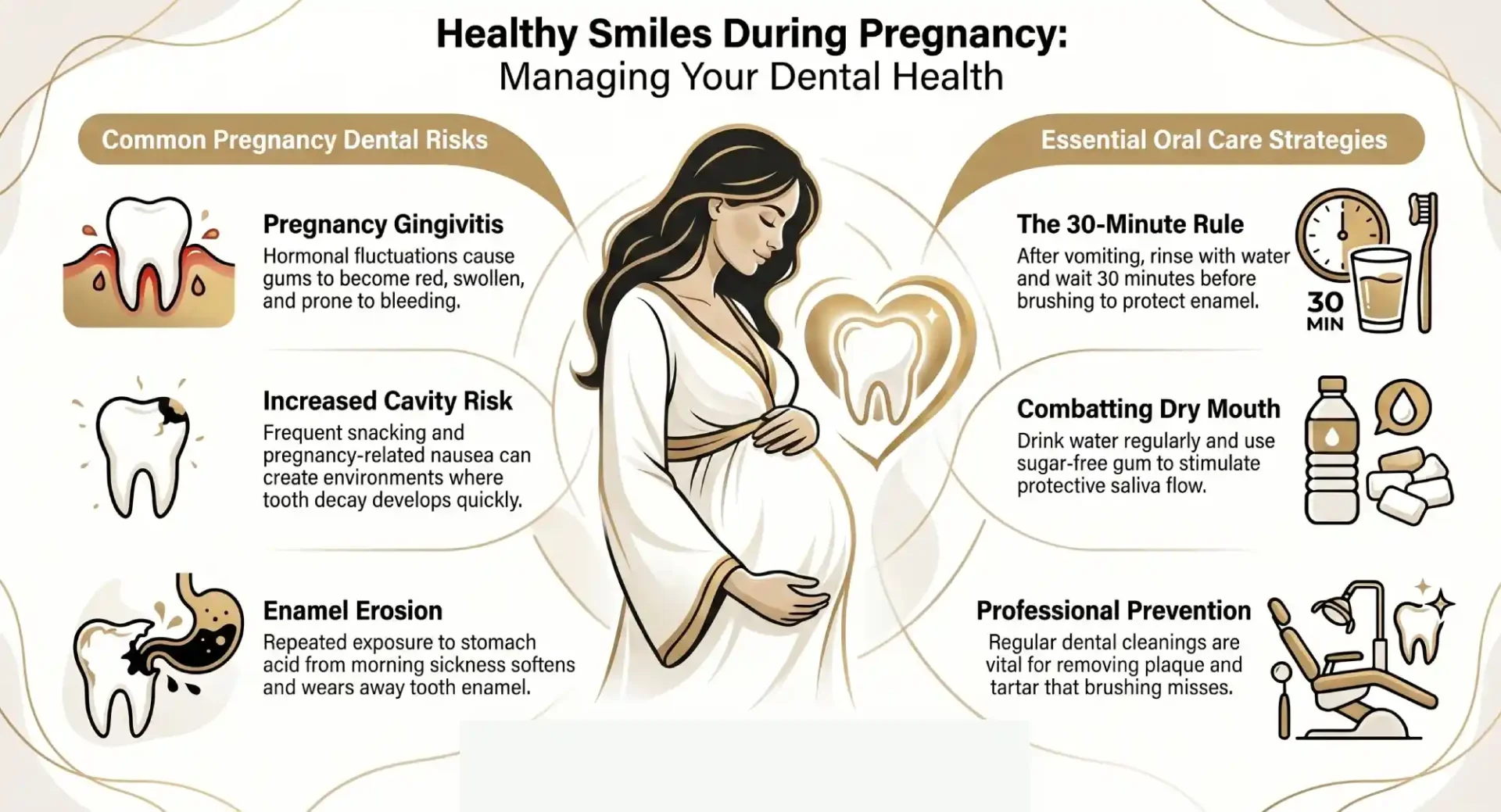
Pregnancy gingivitis is one of the most common oral health conditions experienced during pregnancy. Many women notice that their gums become swollen, tender, red, or bleed while brushing and flossing. This happens because pregnancy hormones increase the gums’ response to plaque bacteria. Even a small amount of plaque along the gumline can trigger inflammation during pregnancy. When plaque is not removed regularly, the gums may become increasingly irritated, leading to persistent bleeding and discomfort. Common signs of pregnancy gingivitis include:
- Red or swollen gums
- Bleeding while brushing or flossing
- Tender gum tissue
- Persistent bad breath
- Gum sensitivity
Although pregnancy gingivitis is common, it should never be ignored. Untreated gum inflammation can worsen over time and may develop into more advanced gum disease. Regular dental check-ups and professional scale and clean appointments can help remove plaque and tartar that brushing alone cannot eliminate. At Parramatta Green Dental, gentle dental cleaning and preventive gum care can help expectant mothers manage pregnancy gingivitis and maintain healthier gums throughout pregnancy.
Tooth Decay and Cavities
Many expectant mothers are surprised to discover that pregnancy can increase their risk of tooth decay. Pregnancy itself does not cause cavities, but several pregnancy-related factors can create an environment where decay develops more easily.
Food cravings often lead to more frequent snacking throughout the day. Sugary snacks, sweet drinks, and carbohydrate-rich foods provide fuel for plaque bacteria. These bacteria produce acids that attack tooth enamel and increase the likelihood of cavities forming. Tooth decay risk may also increase when:
- Brushing becomes difficult because of nausea
- Fatigue affects oral hygiene habits
- Dry mouth reduces saliva protection
- Frequent meals increase acid exposure
- Sugary drinks are consumed regularly
Preventing tooth decay during pregnancy involves maintaining strong plaque control, choosing healthier snacks where possible, and continuing regular dental visits. Using fluoride toothpaste helps strengthen enamel and provides additional protection against cavities.
Tooth Enamel Erosion
Morning sickness is one of the most common pregnancy symptoms, especially during the first trimester. While many people associate morning sickness with temporary discomfort, repeated vomiting can also affect dental health.
Every time vomiting occurs, teeth are exposed to strong stomach acids. These acids can soften and gradually wear away tooth enamel, leading to enamel erosion. As enamel becomes thinner, teeth may become more sensitive to hot, cold, sweet, or acidic foods and drinks. Common signs of enamel erosion include:
- Increased tooth sensitivity
- Teeth appearing more transparent
- Rough or worn tooth surfaces
- Discomfort when eating acidic foods
One of the most important things expectant mothers should know is that brushing immediately after vomiting can make enamel wear worse. After exposure to stomach acid, enamel becomes temporarily softened. Brushing too soon can remove weakened enamel from the tooth surface. Instead, rinse your mouth thoroughly with water after vomiting and wait around 30 minutes before brushing. This allows saliva time to help neutralise acids and reduce enamel damage.
Dry Mouth and Bad Breath
Some pregnant women experience dry mouth due to hormonal changes, dehydration, mouth breathing, or changes in saliva production. Saliva plays a key role in maintaining oral health because it helps wash away food particles, neutralise acids, and reduce plaque build-up. When saliva levels decrease, bacteria can multiply more easily, increasing the risk of:
- Bad breath
- Tooth decay
- Gum irritation
- Plaque accumulation
- Mouth discomfort
Drinking water regularly throughout the day can help maintain hydration and support saliva production. Sugar-free chewing gum may also stimulate saliva flow and provide temporary relief from dry mouth symptoms. Persistent dry mouth should be discussed with your dentist, particularly if it is affecting comfort or contributing to ongoing oral health problems.
Oral Lumps or Gum Growths
Some women notice small growths or lumps on their gums during pregnancy. These changes are sometimes linked to hormonal fluctuations and increased gum inflammation. In many cases, these growths are harmless and may improve after pregnancy, but any unusual lump, swelling, or persistent change inside the mouth should always be professionally assessed. Signs that should prompt a dental examination include:
- A gum lump that continues growing
- Persistent swelling
- Pain around the area
- Bleeding from the growth
- Changes that do not improve
While most pregnancy-related gum changes are not serious, self-diagnosis should be avoided. A dental examination can determine whether the area requires monitoring, treatment, or referral for further investigation. Maintaining good plaque control and regular dental visits often helps reduce irritation around gum tissues and may lower the likelihood of these types of changes developing.
Is Dental Care Safe During Pregnancy?
Yes, routine dental care is generally safe during pregnancy, and it can play an important role in preventing oral health problems from getting worse. Many expectant mothers delay dental visits because they worry treatment may affect the baby, but untreated dental problems can lead to pain, infection, poor sleep, difficulty eating, and extra stress during pregnancy. A dental check-up allows your dentist to assess your teeth and gums, discuss any symptoms, and recommend safe care based on your stage of pregnancy and overall health.
If you are pregnant, always tell your dentist before your appointment. You should also mention how many weeks pregnant you are, whether your pregnancy is high-risk, and whether your GP, midwife, or obstetrician has given any special medical advice. This helps the dental team adapt your treatment plan where needed. Routine check-ups, scale and clean appointments, gum care, and urgent dental treatment can usually be managed safely with the right precautions.
At Parramatta Green Dental, expectant mothers can book gentle dental check-ups, professional cleaning, gum assessments, tooth pain appointments, and emergency dental care in Parramatta. The goal is to keep your mouth comfortable and healthy while avoiding unnecessary treatment delays.
Dental X-Rays, Anaesthetic, and Urgent Treatment
Dental X-rays are not needed for every pregnant patient, but they may be recommended if your dentist needs to diagnose tooth pain, infection, trauma, or another urgent concern. Modern digital dental X-rays use low radiation levels, and your dentist will only recommend imaging when the benefit is important for your diagnosis and treatment. If an X-ray is needed, the dental team can use appropriate precautions and explain why it is being taken.
Local anaesthetic may also be used when treatment is necessary, depending on your situation and dental needs. Painful dental problems should not be ignored because infection can spread and may become harder to manage later. Urgent issues such as facial swelling, severe toothache, broken teeth, dental abscesses, or gum infection should be checked promptly.
Elective cosmetic treatments are often better delayed until after pregnancy, especially if they are not needed for health or comfort. However, necessary dental care should still be discussed with your dentist. A simple appointment can help separate what is urgent, what is safe to treat now, and what can wait until after birth.
Morning Sickness and Tooth Enamel Protection
Morning sickness can affect oral health because vomiting exposes the teeth to stomach acid. This acid can soften tooth enamel and increase the risk of enamel erosion, tooth sensitivity, and dental decay. Even if vomiting happens only during early pregnancy, repeated acid exposure can still irritate the mouth and weaken the tooth surface.
The most important rule is simple: do not brush your teeth straight after vomiting. Brushing immediately can scrub softened enamel and increase wear. Instead, rinse your mouth with plain water to help wash away acid. You can also ask your dentist whether a fluoride mouth rinse is suitable for you, especially if vomiting happens often.
A practical routine after vomiting:
- Rinse your mouth with water.
- Spit out the water instead of swallowing it.
- Wait around 30 minutes before brushing.
- Brush gently with fluoride toothpaste.
- Drink water often during the day.
Try to avoid sipping soft drinks, juice, sports drinks, or other acidic drinks over long periods to manage nausea. If you need small snacks to settle your stomach, choose options that are less sticky and less sugary where possible.
Food Cravings, Calcium, and Tooth-Friendly Eating
Pregnancy cravings are normal, but frequent sugary snacks can increase tooth decay risk. Every time you eat or drink something sugary, plaque bacteria in the mouth produce acids that attack the tooth surface. If snacking happens often throughout the day, teeth spend more time under acid attack, which can lead to cavities.
Calcium-rich foods are also important during pregnancy because they support your own teeth and bones, as well as your baby’s developing bones and teeth. Good options include milk, cheese, yoghurt, ricotta cheese, almonds, broccoli, salmon with edible bones, and calcium-fortified soy drinks. A balanced diet with vegetables, fruits, wholegrains, dairy foods, and enough water can support both oral health and general wellbeing.
| Common Pregnancy Choice | Tooth-Friendly Swap |
| Lollies or sweet biscuits | Cheese, yoghurt, fruit, or nuts if suitable |
| Soft drinks or juice | Water or milk |
| Acidic drinks throughout the day | Drink with meals, then rinse with water |
| Sticky-sweet snacks | Fresh fruit, plain crackers, or yoghurt |
| Frequent grazing | Balanced meals with planned snacks |
You do not need to completely avoid every sweet food, but frequency matters. Eating sweet foods with meals is usually better for teeth than grazing on them all day. Drinking water after snacks can help wash away food particles and reduce acid exposure.
Daily Oral Hygiene Routine for Expectant Mothers
A simple oral hygiene routine can make a major difference during pregnancy. Brush twice a day with fluoride toothpaste, ideally once in the morning and once before bed. Use a soft or extra-soft toothbrush if your gums feel tender or bleed easily. Brush gently along the gumline using small circular movements rather than harsh scrubbing.
Flossing or using interdental brushes daily helps remove plaque between teeth where a toothbrush cannot reach. This is especially important during pregnancy because gums may react more strongly to plaque build-up. If flossing makes your gums bleed, do not stop immediately. Bleeding can be a sign that the gums are inflamed and need better plaque control. If bleeding continues, book a dental appointment.
A simple pregnancy oral care routine:
- Morning: Brush gently with fluoride toothpaste.
- After vomiting: Rinse with water and wait before brushing.
- During the day: Drink water and limit frequent sugary snacks.
- Evening: Brush and clean between teeth before sleep.
- Weekly check: Look for bleeding gums, swelling, sensitivity, or mouth sores.
Mouthwash may help in some cases, but it should not replace brushing and flossing. If you want to use mouthwash during pregnancy, ask your dentist which type is suitable. An alcohol-free mouthwash or fluoride mouth rinse may be recommended depending on your oral health needs.
When Bleeding Gums Need a Dentist
Mild gum bleeding can happen during pregnancy, but persistent bleeding should not be ignored. Bleeding gums often mean plaque is irritating the gum tissue. During pregnancy, hormones can make the gums more reactive, so even small amounts of plaque can cause redness, swelling, and tenderness. A dentist should check your gums if you notice bleeding that continues for more than a few days, swelling, pain, pus, bad breath, gum recession, or loose teeth. These signs may point to gum disease that needs professional care. A scale and clean can remove plaque and tartar that brushing cannot fully remove at home.
At Parramatta Green Dental, gum assessments and gentle cleaning can help expectant mothers manage pregnancy gingivitis and plaque build-up. Early care can reduce discomfort and help protect gum health before the problem becomes harder to manage.
Warning Signs That Need Urgent Dental Attention
Some dental symptoms should be checked quickly during pregnancy. Pain, swelling, infection, and trauma should not be left untreated because they can affect your comfort, sleep, nutrition, and daily wellbeing.
Book a dentist promptly if you have:
- Toothache that does not settle
- Facial swelling
- Gum swelling or pus
- A broken or cracked tooth
- Persistent bleeding gums
- Severe tooth sensitivity
- Pain when chewing
- Bad taste or smell from infection
- A mouth ulcer or oral lump that does not heal
- A loose tooth
Severe swelling, fever, trouble swallowing, or breathing difficulty needs urgent medical help. For less severe but still painful dental problems, an emergency dental appointment can help identify the cause and provide safe treatment options. Pregnancy is not a reason to put up with dental pain. Early assessment can often prevent a small issue from becoming a larger infection or more stressful treatment later.
Oral Health After Baby Is Born
Oral health still matters after your baby is born. Many new mothers become so focused on feeding, sleep routines, and recovery that their own dental care gets pushed aside. Tiredness can make brushing and flossing feel harder, and frequent snacking during night feeds can increase plaque and acid exposure. This is why postpartum oral health should remain part of your self-care routine. Try to keep brushing twice daily with fluoride toothpaste and clean between your teeth once a day. If you had bleeding gums, tooth sensitivity, dry mouth, or dental pain during pregnancy, book a follow-up dental check-up after birth.
Continuing care can help prevent pregnancy-related gum problems from carrying into the postpartum period.
Your baby’s oral health also starts early. Avoid cleaning your baby’s dummy with your mouth, and try not to share spoons, as saliva can pass bacteria from adult mouths to babies. Once your baby’s teeth begin to come through, ask your dentist about age-appropriate brushing, feeding habits, and early childhood decay prevention.
When to Book a Pregnancy Dental Check-Up in Parramatta
The best time to book a dental check-up is before pregnancy if you are planning. If you are already pregnant, an early dental visit can help assess your gums, teeth, plaque levels, and any symptoms such as bleeding gums or sensitivity. Routine dental check-ups and cleaning are often comfortable to manage during pregnancy, especially when problems are identified early. You should also book an appointment at any stage of pregnancy if you have a toothache, swelling, gum bleeding, a broken tooth, bad taste, sensitivity, or signs of infection. Dental pain should not be ignored because it can affect eating, sleeping, and general well-being.
At Parramatta Green Dental, expectant mothers can book dental check-ups, scale and clean appointments, gum assessments, preventive dental care, and urgent dental appointments in Parramatta. The clinic can help you understand what is safe, what can be treated now, and what can wait until after birth.
Pregnancy Oral Health Checklist
Use this simple checklist to protect your teeth and gums during pregnancy:
| Oral Health Step | Why It Helps |
| Tell your dentist you are pregnant | Helps the dental team plan care safely |
| Brush twice daily with fluoride toothpaste | Helps reduce plaque and protect enamel |
| Floss or use interdental brushes daily | Cleans areas a toothbrush cannot reach |
| Rinse with water after vomiting | Helps wash away stomach acid |
| Wait before brushing after morning sickness | Reduces enamel wear |
| Drink water often | Helps hydration and saliva flow |
| Limit frequent sugary snacks | Reduces acid attacks on teeth |
| Choose calcium-rich foods | Supports teeth, bones, and general health |
| Book a dental check-up during pregnancy | Helps with early detection and prevention |
| Do not ignore pain or swelling | Dental infections should be checked promptly |
Key Takeaways
Pregnancy can affect your teeth, gums, saliva, diet, and brushing habits. Bleeding gums, morning sickness, tooth sensitivity, dry mouth, and increased decay risk are common, but they can often be managed with good daily care and regular dental visits. Brushing twice daily with fluoride toothpaste, flossing daily, drinking water, limiting frequent sugary snacks, and rinsing after vomiting can help protect your oral health. Dental check-ups and cleaning are generally safe during pregnancy, and dental pain, swelling, infection, or persistent gum bleeding should be checked. For expectant mothers in Parramatta, Parramatta Green Dental can support pregnancy oral health through preventive care, gentle cleaning, gum assessments, and urgent dental appointments when needed.