
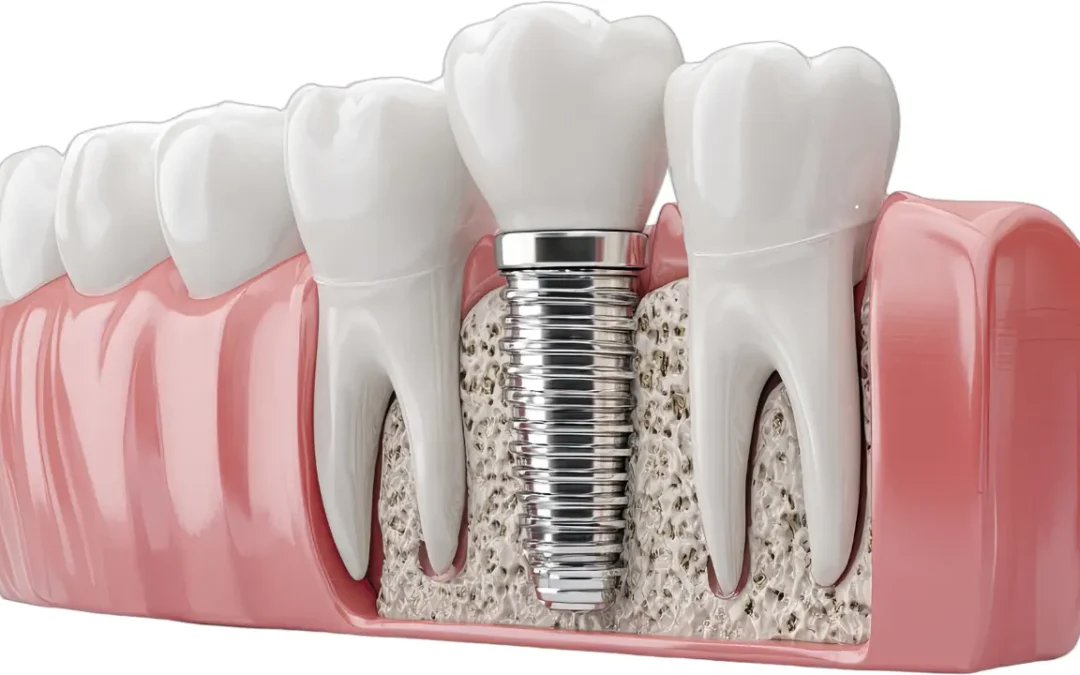
Losing a tooth is already stressful, but hearing that you may also have bone loss can make the situation feel even more worrying. Many people assume that once the jawbone has shrunk, dental implants are no longer possible. The good news is that bone loss does not always rule you out. In many cases, dental implants may still be an option after a proper dental assessment, X-rays, 3D imaging, and a clear treatment plan. Some patients may have enough remaining bone for implant placement, while others may need extra support through bone grafting, sinus lift treatment, ridge augmentation, or another restorative dentistry option.
For patients in Parramatta and nearby areas, this question is common after long-term tooth loss, gum disease, loose dentures, or a previous extraction. At Parramatta Green Dental, dental implant suitability is assessed by looking at the jawbone, gum health, missing tooth area, bite, and overall health. This helps patients understand whether they are suitable for dental implants, whether bone rebuilding is needed first, or whether another tooth replacement option such as a dental bridge or denture may be more suitable.
Quick Answer: Can You Get Dental Implants If You Have Bone Loss?
Yes, you may still be able to get dental implants if you have bone loss, but the answer depends on how much jawbone remains, where the missing tooth is located, and whether the bone can support an implant safely. Dental implants work as artificial tooth roots, so they need enough stable bone around them to hold the implant during chewing and help it integrate over time. Mild bone loss may still allow implant placement with careful planning. Moderate or severe bone loss may need treatment first, such as bone grafting, sinus augmentation, socket preservation, ridge expansion, or other implant planning methods.
The safest way to know is through a dental implant consultation. A dentist can check your gums, bite, jawbone density, bone volume, and medical history before recommending a treatment path. If your jawbone is too thin, too soft, or too reduced in height or width, the dentist may discuss ways to rebuild support before implant placement. If implants are not suitable straight away, you may still have other tooth replacement options, including dental bridges, partial dentures, complete dentures, or implant-supported dentures.
In simple terms, bone loss changes the treatment plan, but it does not automatically close the door on dental implants. The key is proper assessment. This is especially important if a tooth has been missing for years, if you have worn dentures for a long time, or if gum disease has affected the bone around your teeth.
Why Jawbone Health Matters for Dental Implants
A dental implant is often described as an artificial tooth root because it is placed into the jawbone where the natural tooth root used to sit. Once the implant is placed, the bone needs to heal around it and create a stable connection. This healing process is called osseointegration, or bone-to-implant fusion. If the implant integrates well, it can support a dental crown, bridge, or denture and help restore chewing function, comfort, and smile appearance.
Jawbone health matters because chewing places pressure on the implant. Every time you bite or chew, force travels through the implant into the surrounding bone. If the bone is strong, dense, and wide enough, it can help keep the implant stable. If the bone is too thin, too soft, or too reduced, the implant may not have enough support. This can increase the risk of implant movement, poor healing, gum recession, bite problems, or implant failure.
Bone support is also important for appearance. In visible areas of the smile, the shape of the gum and bone can affect how natural the final implant crown looks. If the alveolar ridge has shrunk, the gum line may look uneven, or the replacement tooth may need extra planning to look balanced with the surrounding teeth. This is why implant planning is not just about placing a titanium implant. It also involves checking the bone structure, gum tissue, bite position, and final prosthetic tooth design.
For Parramatta patients considering dental implants, this assessment helps answer three key questions: Is there enough bone for implant placement? Is the gum tissue healthy enough? And what type of replacement tooth will give the best functional and aesthetic result?
What Causes Jawbone Loss After Missing Teeth?
Jawbone loss can happen for several reasons, and one of the most common is missing teeth. Natural tooth roots help stimulate the jawbone during biting and chewing. When a tooth is removed or lost, that area no longer receives the same stimulation. Over time, the bone can begin to shrink through a process called jawbone resorption. This can reduce bone height, bone width, and the shape of the alveolar ridge.
Long-Term Missing Teeth
When a tooth has been missing for months or years, the bone in that area may gradually reduce. This is one reason patients who delayed tooth replacement may later be told that they do not have enough bone for a dental implant. The longer the tooth has been missing, the more likely the jawbone may have changed. This does not mean implants are impossible, but it may mean the implant site needs more careful planning.
Gum Disease and Periodontal Disease
Gum disease is another major cause of jawbone loss. Advanced periodontitis can damage the bone and soft tissue that support natural teeth. If gum disease is active, it can also affect implant success because the gums and bone need to be healthy before implant placement. Patients with a history of severe gum disease may still be considered for implants, but the gum condition must be controlled first. Regular dental check-ups, cleaning, and periodontal care play a key role in long-term implant success.
Tooth Extraction Without Socket Preservation
After a tooth extraction, the empty socket can shrink as it heals. In some cases, socket preservation or alveolar ridge preservation may be recommended to help reduce bone loss after extraction. This involves placing graft material into the socket to support the shape of the ridge. It is often considered when a patient may want a dental implant later. Without ridge preservation, some patients may still be suitable for implants, but others may need bone grafting before implant placement.
Dental Infection or Abscess
A long-term dental infection can damage the bone around a tooth. If infection spreads around the root or surrounding tissues, it may weaken the implant site before the tooth is removed. In these cases, the dentist may need to treat the infection first, allow healing, and then assess whether bone grafting or delayed implant placement is needed.
Jaw Injury or Facial Trauma
Accidents, sports injuries, and facial trauma can damage teeth, gum tissue, and jawbone. If the bone is fractured, reduced, or uneven after injury, implant planning may involve oral surgery, bone reconstruction, or restorative dentistry planning. A dental implant may still be possible, but the condition of the surgical site must be checked first.
Long-Term Denture Use
Dentures can replace missing teeth, but they do not replace natural tooth roots. Because they sit on top of the gum, they do not give the jawbone the same type of stimulation as a tooth root or implant. Over time, some denture wearers notice that their dentures become loose because the jawbone and gum shape have changed. This is one reason implant-supported dentures may be discussed for some patients who want better denture stability.
Medical and Lifestyle Factors
Some medical and lifestyle factors can affect bone quality and healing. Smoking, uncontrolled diabetes, osteoporosis, some medications, poor oral hygiene, and untreated gum disease can all influence implant planning. These factors do not always mean a patient cannot have implants, but they do need to be reviewed before treatment. A good implant plan looks at the whole patient, not just the missing tooth.
Signs You May Have Bone Loss Before Dental Implants
Bone loss is not always easy to see in the mirror, but some signs may indicate that the jawbone has changed. One common sign is a tooth that has been missing for a long time. If the gap has been there for years, the bone underneath may have shrunk. Another sign is loose dentures. If dentures that once fitted well now move around, the gum and jawbone shape may have changed underneath them.
Gum recession can also be a warning sign. When the gums pull back from the teeth, the roots may become more visible, and the supporting bone may also be affected. Patients with a history of gum disease, bleeding gums, deep gum pockets, or previous periodontal treatment should have their gum and bone health checked before implant treatment. A sunken look around a missing tooth area, changes in facial support, or difficulty chewing may also point to bone loss.
Some patients only learn about bone loss after a dental X-ray or 3D scan. For example, a dentist may find that the upper back jaw has limited bone height because the sinus sits close to the missing tooth area. In the lower jaw, the dentist may need to check the position of the nerve before placing an implant. This is why a professional assessment matters. Guessing is not enough when implant safety and long-term stability are involved.
If you have been told you have a thin jawbone, receded jawbone, poor bone density, or insufficient bone for dental implants, it is worth getting a clear explanation of your options. At Parramatta Green Dental, the team can assess your missing tooth area and explain whether dental implants, bone grafting, bridges, dentures, or another restorative option may suit your case.
How Dentists Check If You Have Enough Bone for Implants
A dental implant assessment starts with more than a quick look at the gap. The dentist needs to understand the condition of the bone, gums, bite, and surrounding teeth. This usually begins with an oral examination, where the dentist checks the missing tooth area, gum tissue, oral hygiene, bite pressure, and any signs of infection or gum disease. The dentist will also ask about your medical history, medications, smoking, diabetes, previous surgery, and any history of gum problems.
Dental X-rays help show the jawbone and surrounding structures. In many implant cases, 3D imaging or a CBCT scan may be used to assess bone height, bone width, bone density, sinus position, and nerve location. This is especially useful when the bone is thin, when the tooth has been missing for a long time, or when the implant site is close to the sinus or lower jaw nerve. A 3D scan gives the dentist a clearer view of the implant site and helps guide safe implant planning.
The dentist also checks gum health because implants need healthy surrounding tissue. If there is active periodontal disease, it may need treatment before implant placement. Placing an implant into an unhealthy mouth can increase the risk of infection and future bone loss around the implant. This condition is known as peri-implantitis when it affects an implant.
A proper assessment should answer several important questions:
- Assessment Area
- Why It Matters
- Bone height
- Helps show whether there is enough vertical support for an implant
- Bone width
- Helps show whether the jaw ridge is wide enough for implant placement
| Assessment Area | Why It Matters |
| Bone height | Helps show whether there is enough vertical support for an implant |
| Bone width | Helps show whether the jaw ridge is wide enough for implant placement |
| Bone density | Helps assess how stable the implant may be during healing |
| Gum health | Healthy gums help protect the implant and support healing |
| Sinus position | Important for upper back implants |
| Nerve position | Important for lower jaw implant safety |
| Bite pressure | Heavy bite forces may affect implant planning |
| Medical history | Smoking, diabetes, medications, and healing factors can change the plan |
For local patients, this is where a dental implant consultation in Parramatta becomes useful. Rather than guessing from symptoms, the dentist can use clinical findings and imaging to explain whether you have enough bone, whether bone grafting may be needed, and what treatment sequence makes the most sense.
How Much Bone Do You Need for a Dental Implant?
There is no single amount of bone that applies to every patient because every mouth is different. The amount of bone needed depends on the position of the missing tooth, the size of the implant, the type of replacement tooth, the bite force in that area, and the quality of the surrounding gum tissue. A front tooth, a back molar, an upper-jaw implant, and a lower-jaw implant may all require different planning. Bone quantity and bone quality both matter. Bone quantity refers to how much bone is available in height and width. Bone quality refers to how dense and supportive the bone is. A patient may have enough height but poor width, or enough width but soft bone. Some patients may have enough bone for a narrow or short implant, while others may need grafting to create a safer foundation. This is why imaging and professional judgement are important.
Severe bone loss does not always mean implants are impossible, but it can make treatment more involved. Some cases may need bone grafting, ridge augmentation, sinus lift treatment, or referral for advanced implant planning. Other cases may be better suited to bridges, dentures, or implant-supported dentures. The goal is not just to place an implant. The goal is to create a stable, functional, healthy tooth replacement that can be maintained over time.
For patients comparing dental implants with other tooth replacement options, the best next step is a clear diagnosis. Once the dentist understands your jawbone structure, gum health, bite, and overall health, they can explain whether implant placement is possible now, whether bone rebuilding is needed first, or whether another restorative option may be safer and more practical.
Treatment Options When There Is Not Enough Jawbone for Dental Implants
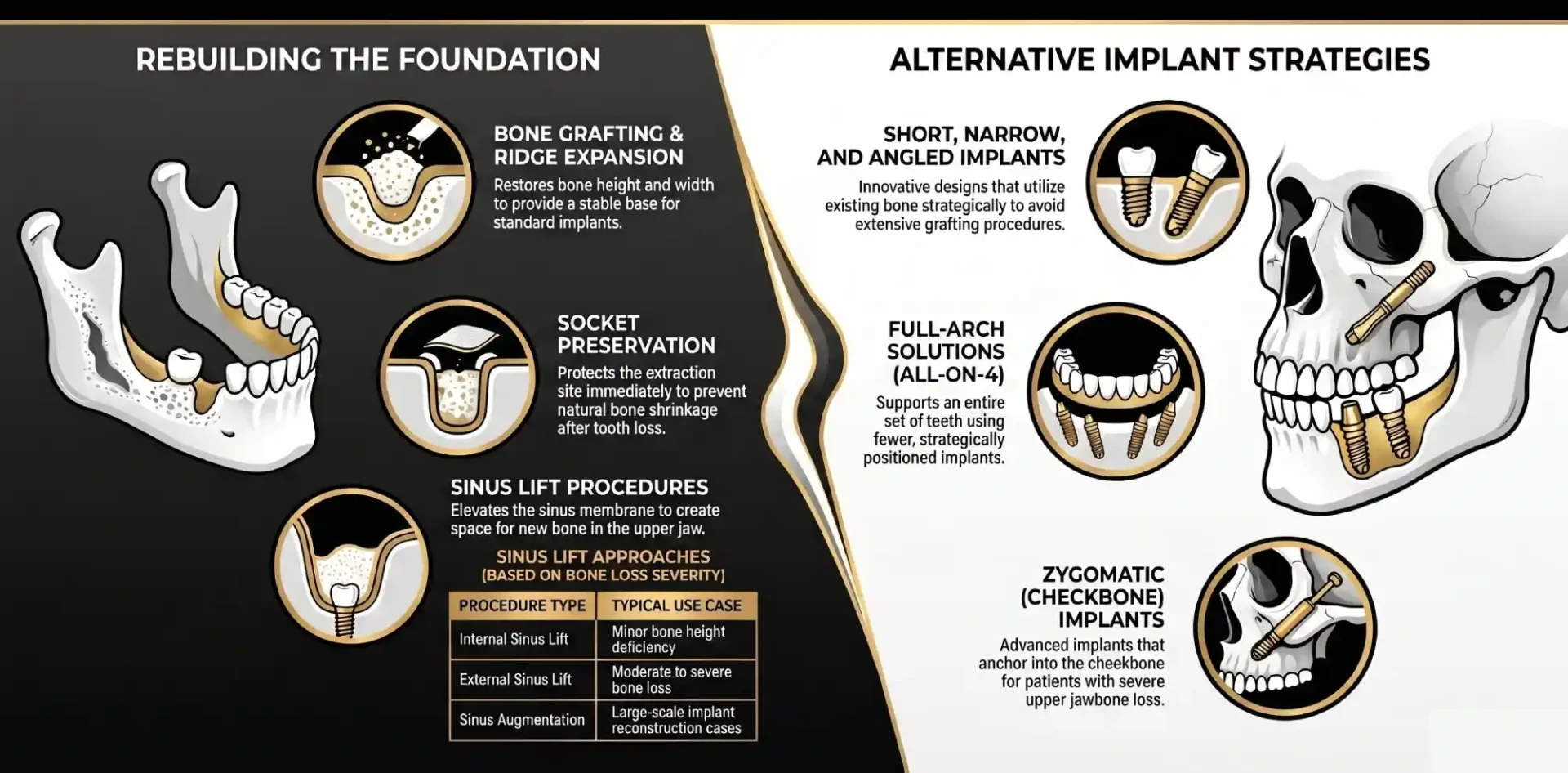
Finding out that you do not have enough bone for a dental implant can be disappointing, but it does not automatically mean your treatment journey ends there. Modern implant dentistry offers several ways to improve bone support, rebuild lost bone, or work around anatomical limitations. The right approach depends on how much bone has been lost, where the missing tooth is located, the condition of the surrounding gums, and your overall oral health. The goal of treatment is always the same: create a stable foundation that can support long-term implant success. In some cases, this may involve rebuilding the jawbone before implant placement. In others, it may involve selecting a different implant design or using a different implant strategy altogether.
Bone Grafting to Rebuild Missing Jawbone
Bone grafting is one of the most common treatments used when there is not enough bone to support a dental implant. The procedure involves placing grafting material into the area where bone has been lost. Over time, the graft acts as a framework that encourages new bone formation and helps strengthen the implant site. Bone grafting can be used for a single missing tooth, multiple missing teeth, or larger areas of jawbone loss. It may be performed months before implant placement or, in selected cases, at the same time as implant surgery. Many patients are surprised to learn that bone grafting is a routine part of implant dentistry. It is commonly recommended when bone volume has been reduced by:
- Long-term tooth loss
- Periodontal disease
- Dental infection
- Trauma or injury
- Previous tooth extraction
- Natural jawbone resorption
The main advantage of bone grafting is that it can improve bone height, width, and overall implant support. This allows implants to be placed in positions that may otherwise be unsuitable.
Socket Preservation After Tooth Extraction
One of the best ways to reduce future bone loss is to protect the extraction site immediately after a tooth is removed. This procedure is called socket preservation or alveolar ridge preservation. After a tooth extraction, the empty socket naturally begins to shrink during healing. While this process is normal, it can reduce the amount of bone available for future implant placement. Socket preservation helps maintain the shape and volume of the ridge by placing graft material into the extraction site before healing occurs. This treatment is particularly valuable for patients who:
- Plan to replace a tooth with a dental implant later
- Have thin bone around the extraction site
- Are losing a front tooth where appearance is important
- Have existing bone loss before extraction
By preserving the ridge early, future implant treatment may become simpler and more predictable.
Ridge Augmentation or Ridge Expansion
Sometimes the issue is not the height of the bone but its width. The jaw ridge may become narrow after years of bone resorption, making it difficult to position an implant correctly. Ridge augmentation and ridge expansion are procedures used to improve the width and shape of the alveolar ridge. Ridge augmentation focuses on rebuilding lost bone volume. Bone graft material may be added to widen the ridge and improve implant support. Ridge expansion is often used when the ridge is narrow but still contains enough height. The bone is carefully widened to create space for implant placement.
These treatments can help:
- Improve implant positioning
- Create better bone support
- Enhance gum contours
- Improve the appearance of the final restoration
- Increase long-term implant stability
For patients with significant ridge shrinkage, ridge augmentation may be combined with other bone regeneration procedures as part of a broader treatment plan.
Sinus Lift or Sinus Augmentation
The upper back jaw presents a unique challenge because of the location of the maxillary sinus. When upper molars or premolars are lost, the bone underneath the sinus can gradually become thinner. At the same time, the sinus cavity may expand into the space where bone once existed. When there is insufficient bone height beneath the sinus, a sinus lift may be recommended. A sinus lift, also known as sinus augmentation, creates additional space for bone formation in the upper jaw. The sinus membrane is gently elevated, and grafting material is placed underneath it. As healing occurs, new bone develops in the area and can later support implant placement.
A sinus lift may be recommended when:
- Upper back teeth have been missing for a long time
- The sinus sits close to the implant site
- Bone height is insufficient for implant stability
- Existing bone quality is poor
There are different approaches depending on the amount of available bone.
| Procedure for Implant | Typical Use |
| Internal Sinus Lift | Minor bone height deficiency |
| External Sinus Lift | Moderate to severe bone loss |
| Sinus Augmentation with Grafting | Larger implant reconstruction cases |
Although the procedure sounds intimidating, sinus lift treatment has become a well-established part of implant dentistry and can significantly expand treatment options for patients with upper jaw bone loss.
Short, Narrow, or Angled Implants
Advances in implant design have created new options for patients with reduced bone volume. In the past, many patients automatically required major grafting procedures. Today, certain cases may be managed with specially selected implant designs.
Short Implants
Short implants are designed for situations where bone height is limited. They may allow implant placement without extensive bone reconstruction in carefully selected cases.
Narrow Implants
Narrow implants can be useful when bone width is reduced or when space between teeth is limited.
Angled Implants
Angled implants use available bone more strategically. Instead of placing implants vertically, they may be positioned at an angle to avoid anatomical limitations while still providing strong support. Potential benefits include:
- Reduced need for extensive grafting
- Shorter treatment times in some cases
- Improved use of existing bone
- Alternative solutions for difficult cases
These approaches require detailed planning using digital imaging and should only be recommended after careful assessment.
Full-Arch Implant Options for Severe Bone Loss
Patients who are missing most or all of their teeth often have different treatment needs than someone replacing a single tooth. In full-arch cases, dentists may be able to use available bone more efficiently by placing strategically positioned implants that support an entire arch of teeth.
Popular options include:
- All-on-4 implants
- All-on-X implants
- Fixed implant-supported bridges
- Implant-supported overdentures
Instead of replacing every missing tooth with an individual implant, these approaches use a smaller number of implants to support a complete set of replacement teeth. Benefits may include:
- Improved stability compared with traditional dentures
- Better chewing ability
- Reduced denture movement
- More confidence when speaking and eating
- Improved support for facial structures
For patients with severe bone loss, these approaches may provide an alternative pathway when traditional implant placement is challenging.
Specialist Options for Complex Bone Loss
In some situations, bone loss becomes severe enough that conventional implant approaches are no longer suitable. This is more common in patients who have experienced:
- Extreme jawbone resorption
- Long-term complete tooth loss
- Severe periodontal disease
- Major facial trauma
- Previous implant failure
- Significant upper jaw bone loss
In these situations, referral for specialist assessment may be recommended. One example is zygomatic implants, sometimes called cheekbone implants. Rather than relying on the upper jawbone, these implants anchor into the zygomatic bone (cheekbone), which typically remains strong even when the upper jaw has experienced significant bone loss. Because these treatments are highly specialised, they are generally reserved for advanced cases where conventional implant solutions are not appropriate.
The important message for patients is that severe bone loss does not always mean there are no options available. Advances in implant dentistry continue to expand what is possible.
Can You Get Dental Implants Without a Bone Graft?
Sometimes, yes. Many patients assume that any amount of bone loss automatically means bone grafting is required. In reality, some people still have enough healthy bone to support an implant despite moderate bone changes. Whether grafting is needed depends on:
- Bone height
- Bone width
- Bone density
- Implant position
- Bite force
- Gum health
- Implant design
In certain situations, a dentist may recommend:
- Short implants
- Narrow implants
- Angled implants
- Full-arch implant approaches
- Immediate implant placement after extraction
However, bone grafting should never be skipped simply to save time or reduce treatment costs if it is necessary for long-term implant stability. The purpose of treatment is not simply to place an implant. The goal is to create a healthy, stable, functional tooth replacement that remains successful for many years.
What Happens If Bone Loss Is Ignored Before Implant Placement?
Ignoring bone loss can increase the likelihood of complications.
Dental implants rely on strong support from the surrounding jawbone. If an implant is placed into bone that cannot properly support it, the chances of long-term success may be reduced.
Potential problems can include:
- Implant movement during healing
- Poor implant integration
- Implant loosening
- Gum recession around the implant
- Bite imbalances
- Implant overload
- Infection
- Bone graft failure
- Implant failure
In upper jaw cases, insufficient planning may increase the risk of sinus-related complications. In lower jaw cases, careful attention is needed around important nerves. This does not mean complications are common. Modern imaging and treatment planning are commonly used to help reduce surgical risks and improve treatment planning accuracy. The key message is that proper assessment and treatment planning should always come before implant placement. When patients understand the condition of their jawbone before treatment begins, they are in a much better position to make informed decisions about their long-term oral health.
Alternatives If Dental Implants Are Not Suitable Right Away
Dental implants are a strong tooth replacement option, but they are not the only choice. If you are not suitable for implants straight away, or if you prefer a different option, your dentist may discuss dental bridges, partial dentures, complete dentures, or implant-supported dentures.
Dental Bridges
A dental bridge replaces one or more missing teeth with fixed prosthetic teeth. It may be supported by nearby natural teeth or, in some cases, implants. Bridges can be made from porcelain, ceramic, or other dental materials. They may be suitable when nearby teeth are strong enough to support the restoration and when implant treatment is not preferred or not possible.
Partial Dentures
Partial dentures are removable prosthetic devices used when some natural teeth remain. They can replace several missing teeth and are often more affordable upfront than implants. However, they do not replace tooth roots, so they do not provide the same bone stimulation as dental implants.
Complete Dentures
Complete dentures replace a full arch of missing teeth. They can restore appearance and basic chewing function, but some patients experience movement, looseness, or reduced confidence when eating. Long-term denture use may also be linked with changes in jawbone shape over time.
Resin-Bonded Bridges
A resin-bonded bridge may be used in selected cases, often for a missing front tooth. It is usually more conservative than a traditional bridge because it may require less preparation of nearby teeth. Suitability depends on bite, tooth position, and the condition of the surrounding teeth.
Implant-Supported Dentures
Implant-supported dentures use dental implants to improve denture stability. They may be suitable for patients missing many or all teeth, especially when traditional dentures feel loose. This option may provide better comfort and chewing confidence than removable dentures alone.
When Should You Book a Dental Implant Consultation?
You should book a dental implant consultation if you have a missing tooth, loose denture, long-term gap, gum disease history, or have been told you do not have enough bone for implants. Early advice can help you avoid more bone loss and compare your treatment options clearly. At Parramatta Green Dental, patients can discuss dental implants, bone grafting needs, crowns, bridges, dentures, and other restorative dentistry options in one appointment. The dentist can assess your jawbone, gum health, bite, and missing tooth area before explaining what may be possible.
A consultation may be useful if:
- Your tooth has been missing for months or years
- You are worried about jawbone loss
- You want to replace missing teeth
- You wear loose or uncomfortable dentures
- You want to know if you need a bone graft
- You are comparing implants, bridges, and dentures
- You want a local dental implant assessment in Parramatta
The aim is to give you a clear treatment direction, not pressure you into one option. Some patients may be ready for implant planning. Others may need gum treatment, bone grafting, extraction planning, or a non-implant solution first.
Key Takeaways
Bone loss does not automatically mean you cannot get dental implants. Many patients with jawbone loss can still be considered for implants after proper assessment and planning. The most important factors are bone height, bone width, bone density, gum health, bite pressure, and overall health. If the jawbone is too thin or reduced, treatments such as bone grafting, socket preservation, ridge augmentation, and sinus lift surgery may help rebuild support.
Some patients may also be suitable for short implants, narrow implants, angled implants, full-arch implant options, or implant-supported dentures. If implants are not the right choice straight away, bridges and dentures can still replace missing teeth and improve function. The best first step is a dental implant consultation. For patients in Parramatta, Parramatta Green Dental can assess your bone health and explain the treatment options that may suit your mouth, health, and goals.