
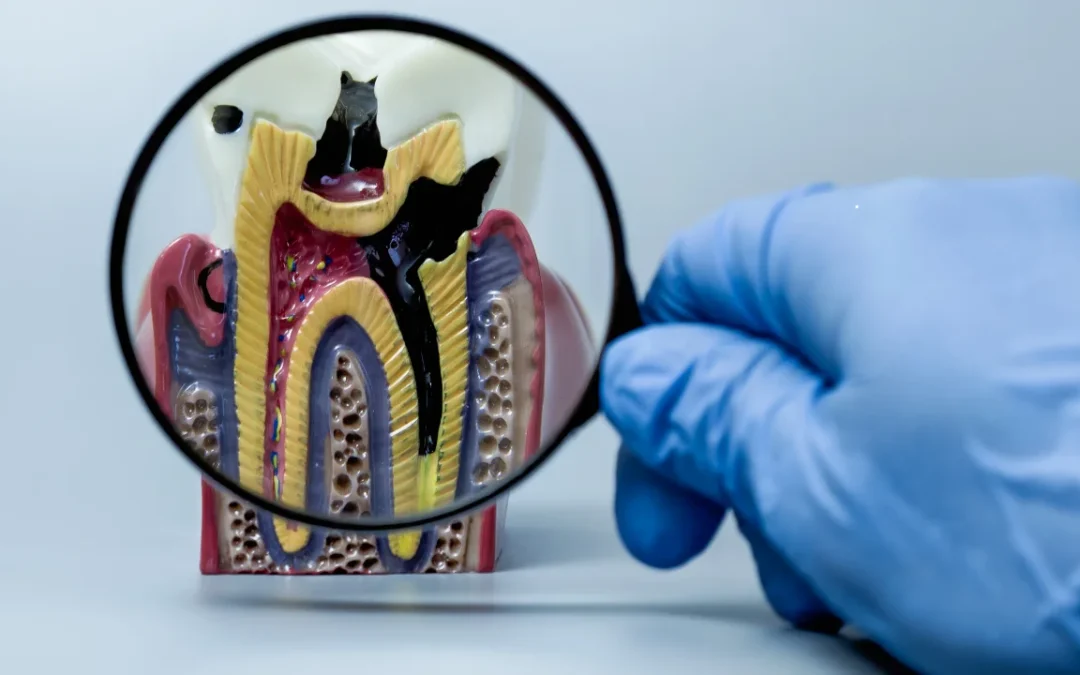
Waking up with a sharp, throbbing ache in the back of your mouth can instantly disrupt your entire week. You try to sip your morning flat white or a glass of cold water, but a piercing pain lingers long after you have finished. Many Australians immediately worry when they realise this type of deep, unrelenting discomfort usually means bacteria have made their way deep inside the tooth structure. While the phrase “root canal” has historically evoked unease, modern dental care treats this procedure as a straightforward, routine solution designed to eliminate active pain and protect your natural smile from tooth loss. Understanding exactly how these infections take hold, recognising the earliest warning signs, and knowing how to look after your teeth daily can mean the difference between a simple filling and a major dental emergency.
What is a Root Canal Infection?
It occurs when microscopic bacteria penetrate the protective outer layers of a tooth and settle inside the living tissue chamber. Treating this involves removing the damaged or dead nerve tissue, cleaning the internal channels, and sealing the space. Prevention requires prompt placement of a final porcelain crown, using custom nightguards to prevent structural cracks, and maintaining thorough interdental cleaning between your teeth.
How an Infection Reaches the Nerve
Your teeth are made of three distinct layers, starting with the hard outer enamel, followed by a softer, sensitive layer called dentin. At the very center lies the dental pulp, a delicate chamber housing the vital blood vessels and nerves that kept the tooth alive while it was growing. When physical damage or decay breaks through the enamel and dentin walls, bacteria flood into this sterile center. Because the pulp chamber is a tight, enclosed space, the body’s inflammatory response causes intense pressure to build up inside the tooth. As the inflammation increases, it cuts off the internal blood supply, causing the nerve tissue to die and turning the root canal system into an ideal environment for harmful bacteria to multiply and spread toward the jawbone.
A major medical reality that surprises many people is that an established infection inside a dead tooth cannot be cured by your body’s immune system or by prescription antibiotics alone. Once the blood supply inside the pulp chamber is gone, there is no way for your body’s natural defense cells or circulating oral medications to physically reach the bacteria hiding inside the tooth channels. Antibiotics might temporarily reduce the swelling in the surrounding gum tissue, but the root cause of the issue remains trapped inside the bone. The only way to save the natural tooth structure and stop the problem permanently is through physical intervention by a dental professional, who must mechanically clean, disinfect, and seal the empty space.
Phase 1: Why a Living Tooth Gets Infected
An initial infection inside a living, untreated tooth rarely happens overnight; it is almost always the result of a gradual breakdown of the tooth’s natural defenses. Every day, your mouth fights off acids and bacteria, but when structural barriers are compromised, the inner pulp becomes highly vulnerable. Australians who skip routine checkups often find that small, painless issues on the surface of their teeth silently progress deeper into the nerve space over several months. Identifying these entry pathways early allows you to take action before a minor cavity transforms into a severe, throbbing dental abscess.
The Primary Pathways for Bacteria
The most frequent pathway for an infection is deep dental decay, which begins when surface cavities are left unmanaged for too long. Over time, dietary sugars and oral acids eat through the enamel and erode the porous dentin layer, giving bacteria a direct highway into the pulp chamber. Another common entry point is structural trauma, such as a sudden sports injury or a hairline fracture caused by biting down on something hard like an unpopped popcorn kernel. These micro-cracks can be invisible to the naked eye but are wide enough for microscopic organisms to slip through. Finally, old fillings that have developed degraded margins or have pulled away from the tooth over years of chewing create tiny gaps where saliva and plaque accumulate, leading to decay right beneath the existing dental restoration.
Warning Signs You Need an Emergency Assessment
When a tooth reaches a state of active infection, it sends clear signals that require immediate professional attention before the issue spreads to the surrounding bone. The most prominent symptom is continuous, throbbing pain that radiates along your jawline, into your ear, or up toward your temple, often becoming much worse when you lie down to sleep at night due to increased blood pressure in the head.
You will also likely notice extreme, lingering sensitivity to hot and cold temperatures, where a hot soup or an icy drink causes a dull ache that lasts for minutes after the food is gone. In advanced cases, a small, fluid-filled bump called a fistula, often described as a gum pimple, may form on the gumline near the root tip, occasionally releasing a foul-tasting fluid that temporarily relieves the throbbing pressure but confirms a deep abscess is present. Lastly, if the inner nerve tissue has completely died, the exterior enamel may begin to take on a gray, dark yellow, or bruised discoloration, signaling that the tooth is no longer vital.
- Severe, Radiation Pain: Discomfort that moves along the jaw, neck, or face.
- Thermal Lingering: Pain from hot or cold items that stays for minutes.
- Gum Swelling or Abscess: A visible, draining bump on the soft tissue near the tooth root.
- Enamel Color Shift: The tooth turns a dark gray or dull yellow shade.
Phase 2: Post-Procedure Complications: When a Treated Tooth Re-Infects
While a primary root canal procedure has a remarkably high success rate, there are instances where a tooth that was treated months or even years ago begins to hurt again. It can be incredibly frustrating to experience discomfort in a tooth where the nerve was already removed, but a secondary reinfection is a distinct clinical situation that requires a different approach. When a treated tooth becomes painful, it is not because the old nerve has magically come back to life. Instead, it means new strains of bacteria have managed to find their way back into the deep roots of the tooth, causing inflammation in the highly sensitive bone and periodontal ligaments that anchor the tooth into your jaw.
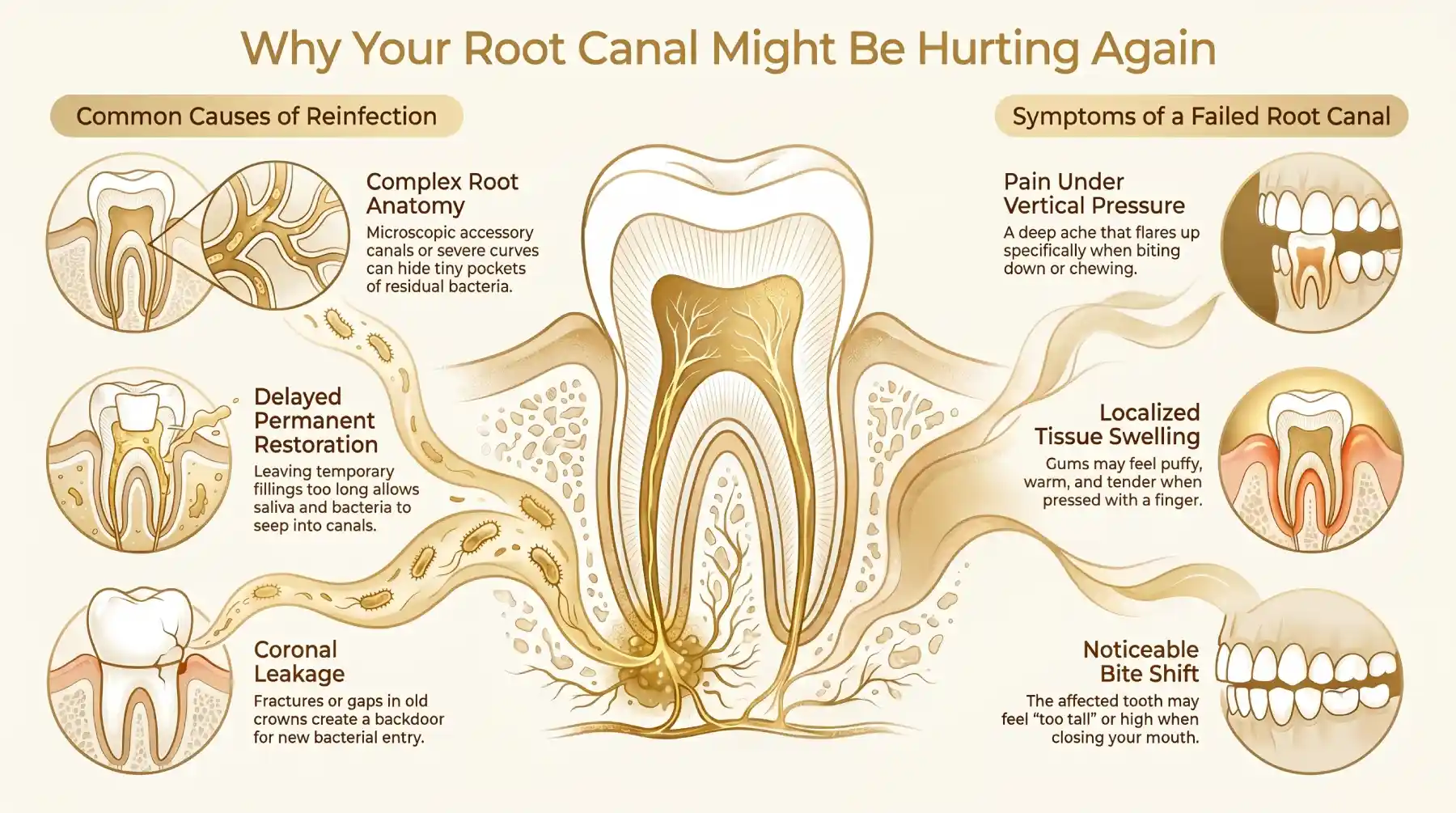
Why a Sealed Root Canal Can Fail
The reasons behind a secondary infection usually come down to the incredibly intricate anatomy of human teeth or a breakdown in the protective seals over time. Some teeth possess highly complex root structures, including microscopic accessory canals or severe curves that can easily hide tiny pockets of residual bacteria during the initial treatment.
Another frequent cause is a delayed permanent restoration; if a patient leaves a soft, temporary filling in place for too long instead of returning to the clinic for a proper dental crown, saliva and oral bacteria will eventually seep through the temporary material and contaminate the clean canal space. Lastly, coronal leakage occurs when a high-quality crown or final composite filling sustains a fracture, develops a microscopic gap along its border, or loses its medical adhesive after years of heavy chewing, creating an open backdoor for new bacteria to enter.
Symptoms of a Secondary Infection
Recognising a failed or leaking root canal requires paying attention to specific mechanical changes in your mouth, as the classic nerve-driven temperature pains will no longer be present. The most obvious indicator is a dull, deep ache that flares up as severe pain whenever you apply vertical pressure, such as when biting down or chewing hard foods. You may also experience localised tissue swelling, where the gum area directly above or below the tooth feels puffy, warm, and highly tender when pressed with a finger or a toothbrush.
Additionally, as fluid and pressure build up in the tiny space between the tooth root and the jawbone, you might experience a noticeable bite shift, describing a distinct sensation that the affected tooth feels slightly too tall or high when you close your mouth normally.
The Clinical Solution: What Happens at the Clinic?
When you present to a dental clinic with a suspected infection, the primary goal of the team is to figure out the exact point of failure and map out a pathway to completely eliminate the discomfort. Modern diagnostics have completely changed this process, making it highly precise and stress-free for anxious patients. Dentists rely heavily on a combination of visual exams, digital X-rays that use minimal radiation to show bone density losses at the root tip, and gentle percussion tests to see how the surrounding ligament responds to touch. Once the structural health of the root is fully understood, the clinical team can match the diagnosis with a specific, targeted procedure to save the tooth.
| Diagnosis | The Correct Medical Procedure | Expected Result |
| New Surface & Pulp Infection | Standard Root Canal Therapy | Thoroughly cleans the main canals, removes the dying nerve, stops active pain, and preserves the natural tooth structure. |
| Leaking or Missed Internal Canals | Endodontic Retreatment | Safely removes old filling materials, disinfects hidden accessory paths under high magnification, and re-seals the channels. |
| Persistent Root-Tip Abscess | Apicoectomy (Minor Root Surgery) | Opens the gum tissue slightly to access the very end of the root tip, removes the localised infection directly, and seals the root from the bottom. |
Prevention: Shielding Your Smile From Future Risk
Preventing a recurrence or avoiding a primary root canal infection altogether comes down to establishing consistent daily habits and choosing the right structural protections for your teeth. Once a tooth has been compromised by deep decay or trauma, it requires a deliberate maintenance plan to ensure the internal seals remain completely airtight. By taking proactive steps at home and working closely with your dental team, you can drastically lower the risk of experiencing unexpected dental pain or requiring emergency treatments down the road.
Protecting a Newly Treated Tooth
In the immediate weeks following a root canal procedure, your tooth is in a vulnerable transitional state and needs careful management to prevent early structural failure. First, you should avoid mechanical stress by committing to chew all hard, crunchy, or sticky foods entirely on the opposite side of your mouth until your permanent porcelain crown or final restoration is fully cemented into place. A tooth that has undergone root canal therapy becomes naturally more brittle because it no longer has an internal blood supply, making it susceptible to vertical fractures if exposed to heavy biting forces prematurely. Furthermore, it is critical to always complete any prescribed antibiotic or anti-inflammatory medication courses exactly as directed, even if your physical pain completely vanishes within the first forty-eight hours.
Long-Term Maintenance Protocols
Preserving your dental health over the long term requires a strong commitment to meticulous interdental cleansing, which targets the vulnerable areas where teeth meet the gumline. While standard brushing cleans the front and back faces of your enamel, daily flossing or using specialised interdental brushes is the only way to remove plaque from the margins where your dental crowns and fillings sit. If you suffer from nocturnal bruxism, investing in a custom nightguard is an essential safeguard to shield your natural teeth and expensive porcelain work from the immense pressures of subconscious teeth grinding, which can otherwise cause microscopic stress fractures over time. Finally, scheduling proactive bi-annual examinations every six months allows your clinician to use digital diagnostic tools to check the integrity of old dental work, catching tiny leaks or marginal decay before they ever have a chance to breach the nerve space.
- Daily Interdental Cleaning: Use floss or small interdental brushes to keep the margins of crowns and fillings clean.
- Bruxism Protection: Wear a custom nightguard to prevent teeth grinding from fracturing root-treated teeth.
- Regular Six-Month Checks: Allow a professional to monitor old restorations for microscopic leaks.
Frequently Asked Questions
Can a root canal infection spread to other parts of the body?
Yes, a root canal infection can absolutely spread beyond the confines of the tooth if it is left completely untreated for an extended period. When the bacteria overwhelm the root tip, they form a periapical abscess that can gradually erode the surrounding jawbone. From there, the infection can migrate into the soft tissues of the face and neck, cause painful swelling in the lymph nodes, or even enter the bloodstream, which poses serious systemic health risks and underscores the importance of seeking timely professional treatment.
Is a root canal procedure painful if the tooth is actively hurting?
No, a modern root canal procedure is not painful, even if the tooth is actively throbbing before you sit in the dental chair. Local anesthetics are incredibly advanced, and your clinician will ensure the entire tooth and the surrounding nerve pathways are completely numbed before any work begins. The primary purpose of the treatment is actually to provide immediate relief by physically removing the internal tissue inflammation and pressure that caused the severe pain in the first place.
How long can a temporary filling last before it becomes unsafe?
A temporary filling is designed to be a short-term stopgap and should generally not be left in place for more than two to three weeks. Because the material used for temporary fillings is relatively soft and porous, it gradually degrades under the daily pressure of chewing and exposure to saliva. Delaying your appointment for a permanent crown or final restoration allows bacteria to slowly seep past the temporary barrier, which can contaminate the freshly cleaned channels and cause the entire treatment to fail.
Taking Control of Your Oral Health
Dental infections are progressive conditions that develop hidden away from view, meaning they require timely professional care to resolve safely before causing extensive damage. Whether you are currently dealing with a persistent, throbbing toothache or you suspect that a previous dental treatment might need a second look, acting early is always the best way to protect your natural smile.
The experienced Dentist at Parramatta Green Dental provides modern, gentle care in a supportive environment right inside Westfield Parramatta, making it convenient to fit your dental health needs into a busy schedule. You can get the quality treatment you need without unnecessary delay or financial stress.