
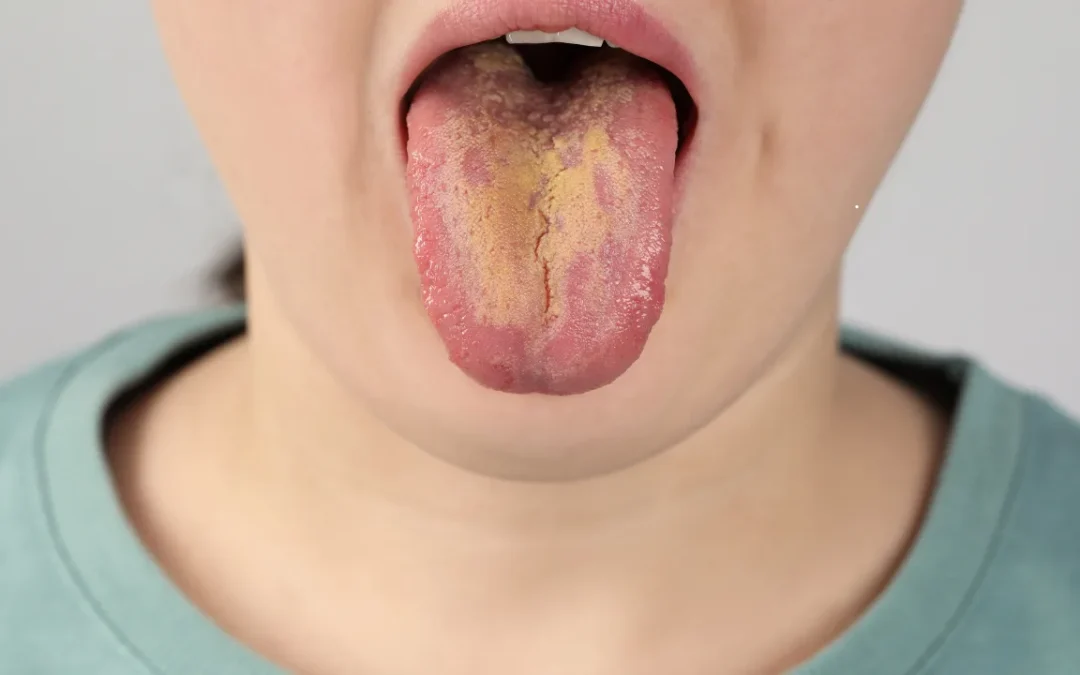
Oral thrush can feel confusing because it often appears suddenly. One day your mouth may feel normal, and then you may notice white patches on your tongue, soreness inside your cheeks, a burning feeling, an unpleasant taste, or discomfort under dentures. Many people worry that it means poor hygiene, but oral thrush is usually linked to a change in the mouth’s natural balance. The main cause is Candida yeast growing too much in the mouth, often after triggers such as antibiotics, dry mouth, dentures, diabetes, smoking, inhaled corticosteroids, or a weakened immune system. In Australia, oral thrush is also known as oral candidiasis, and reliable health sources describe it as a mouth infection caused by Candida, a yeast fungus that can live in the mouth without always causing problems.
What Is Oral Thrush?
Oral thrush is a fungal infection of the mouth caused by an overgrowth of Candida yeast, most commonly Candida albicans. It can affect the tongue, inner cheeks, gums, palate, throat, lips, and corners of the mouth. Some people describe it as a white coating, white plaques, red sore areas, burning mouth, bad taste, or a cotton-like feeling inside the mouth. In many cases, Candida is already present in the oral cavity as part of the normal oral microbiome, but it becomes a problem when it grows beyond normal levels.
The mouth normally contains many microbes, including bacteria and fungi. These organisms usually stay in balance because saliva, good bacteria, oral hygiene, and immune defence help control them. When that balance is disturbed, Candida can multiply and cause oral candidiasis. This is why oral thrush may appear after a course of antibiotics, during illness, with poor denture hygiene, or when the mouth becomes dry.
Why Candida Overgrowth Happens in the Mouth
Candida overgrowth happens when the mouth’s natural protection becomes weaker or disrupted. A healthy mouth has saliva to wash away debris, good bacteria to limit fungal growth, and an immune system that helps control microbes on the oral mucosa. If one or more of these defences changes, Candida can spread across the soft tissues of the mouth and cause symptoms.
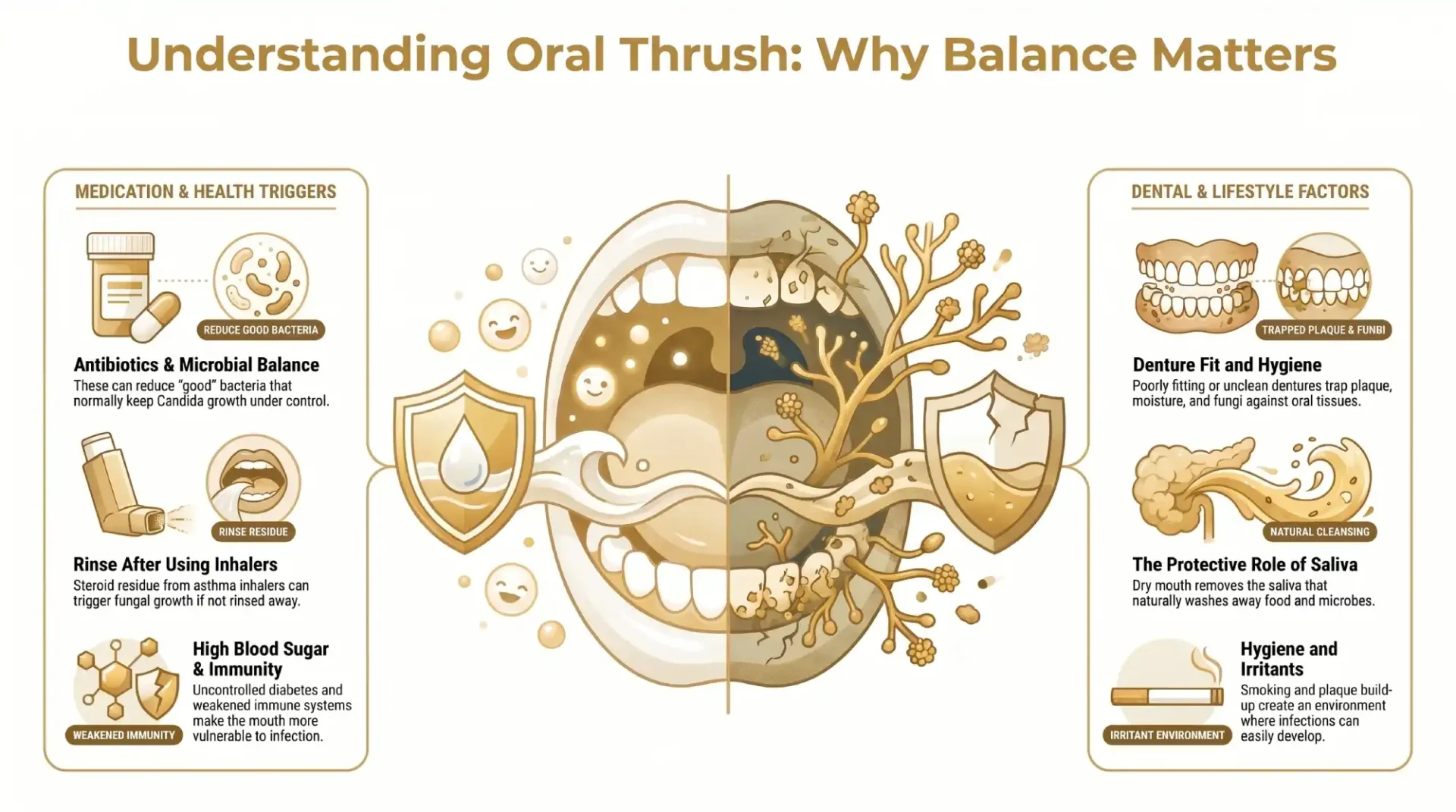
This is why oral thrush is often linked with practical health and dental factors rather than one single reason. For example, antibiotics can reduce helpful bacteria, steroid inhalers can leave medicine on the oral tissues, dentures can trap moisture and plaque, and dry mouth can reduce saliva’s protective effect. Healthdirect Australia lists diabetes, chronic illness, and poor dental hygiene as risk factors for developing oral thrush.
Candida Can Live in the Mouth Without Causing Infection
Candida does not always mean infection. Many people can have Candida in the mouth without pain, white patches, or soreness. The problem begins when Candida changes from being a normal resident into an overgrowth. This shift can happen when the oral microbiome is disturbed, when the immune system is weaker, or when the mouth environment becomes more favourable for yeast growth.
For example, if someone has dry mouth, saliva may not clear microbes as effectively. If someone wears dentures overnight, the warm and moist area under the denture can allow Candida to grow more easily. If someone has diabetes that is not well controlled, higher sugar levels in saliva may support Candida growth
Oral Thrush Cause vs Risk Factor
The direct cause of oral thrush is Candida overgrowth. The risk factors are the things that make Candida overgrowth more likely. This difference matters because treating the infection alone may not stop it from returning if the trigger remains active. For example, a patient may use antifungal treatment and feel better, but if their dentures are not cleaned properly or they continue using an inhaled steroid without rinsing afterwards, oral thrush may return.
Main Causes and Risk Factors of Oral Thrush
Oral thrush usually develops because one or more risk factors disturb the normal mouth environment. Some causes are medication-related, some are dental-related, and others are linked with general health. Understanding these factors helps patients take practical steps and know when professional advice is needed.
Antibiotics and Long-Term Antibiotic Use
Antibiotics are one of the most common medication-related causes of oral thrush. They are useful and often necessary for bacterial infections, but they can also reduce the good bacteria that help keep Candida under control. When this balance changes, Candida can multiply and cause white patches, soreness, burning, or taste changes in the mouth.
The risk may be higher with long-term antibiotics, repeated courses, high doses, or broad-spectrum antibiotics. The CDC lists antibiotics as a risk factor for candidiasis, and oral thrush can affect the mouth, throat, or oesophagus in higher-risk groups.
If symptoms appear after antibiotics, it does not mean the antibiotic was wrong. It simply means the mouth’s microbial balance may have shifted. Patients should not stop prescribed medicine without speaking to their doctor. If mouth symptoms are painful, spreading, or not improving, a dentist or GP can assess the mouth and advise on the next step.
Asthma Inhalers and Inhaled Corticosteroids
Inhaled corticosteroids are another common trigger for oral thrush, especially for people using asthma or COPD inhalers. These medicines can leave small amounts of steroid on the tongue, throat, and oral mucosa. If the mouth is not rinsed after use, Candida may grow more easily in those areas.
This risk does not mean people should stop their inhaler. Asthma medicine can be essential. The practical step is to use it correctly, rinse the mouth after use, and follow the advice of a doctor or pharmacist. NHS Inform lists inhaled corticosteroid medication for asthma as a cause of oral thrush in adults, along with antibiotics, dentures, dry mouth, smoking, and cancer treatments. Children who use inhalers may also need help building a habit of rinsing and spitting after use. A dentist can check for signs of oral irritation, dry mouth, plaque build-up, or white patches during routine check-ups.
Dentures and Poorly Fitting Dental Appliances
Dentures are a major dental-related risk factor for oral thrush. This is especially true if dentures are worn overnight, do not fit well, or are not cleaned thoroughly. Dentures can trap plaque, food debris, moisture, and Candida against the oral tissues. Over time, this can lead to redness, soreness, and denture stomatitis, which is commonly linked with Candida.
Poorly fitting dentures may also rub the gums or palate, creating irritated areas where infection is more likely to develop. This can be uncomfortable and may cause burning, swelling, red patches, or soreness under the denture.
A dental check-up is useful for denture wearers because the dentist can assess denture fit, tissue irritation, plaque build-up, and cleaning habits. At Parramatta Green Dental, denture-related mouth discomfort can be checked as part of a general oral examination, and patients can receive advice on denture hygiene and whether their appliance needs adjustment or replacement.
Dry Mouth and Reduced Saliva
Dry mouth is an important cause because saliva protects the mouth. Saliva helps wash away food particles, supports the oral microbiome, and reduces the build-up of microbes on the tongue, gums, cheeks, and palate. When saliva flow is reduced, Candida has a better chance to grow.
Dry mouth can happen for many reasons, including dehydration, mouth breathing, certain medicines, ageing, medical conditions, and cancer treatments. Some medicines, including antihistamines and diuretics, may contribute to dryness in some people. A dry mouth may feel sticky, sore, or burning, and it can also increase the risk of tooth decay, gum problems, bad breath, and mouth infections.
Because dry mouth has both dental and medical causes, it should not be ignored if it is persistent. A dentist can check for oral signs linked with dryness, such as thick saliva, plaque build-up, gum irritation, tooth decay, and soft tissue soreness. If a medical cause is suspected, the dentist may suggest speaking with a GP.
Diabetes and High Blood Sugar
Diabetes is a well-known risk factor for oral thrush, especially when blood sugar is not well controlled. Higher sugar levels can make it easier for Candida to grow in the mouth. People with diabetes may also experience dry mouth, slower healing, gum disease, or recurring infections, which can increase the chance of oral candidiasis.
For patients with diabetes, oral thrush that keeps coming back may be a sign that both dental and medical review are needed. A dentist can assess the mouth, gums, dentures, and oral hygiene, while a GP can review blood sugar control and general health. This combined approach is especially important when symptoms are severe, recurring, or slow to improve.
Weak Immune System or Chronic Illness
A weakened immune system can make oral thrush more likely because the body has less ability to control Candida growth. This can affect people undergoing chemotherapy or radiotherapy, people with cancer, people taking immunosuppressant medicines, organ transplant patients, and people with untreated HIV or AIDS. Babies and older adults can also be more vulnerable because their immune defence may be immature or reduced. The CDC notes that babies under 1 month and people with HIV/AIDS have a higher risk of candidiasis in the mouth, throat, or oesophagus.
In people with weakened immunity, oral thrush should be taken seriously because it may spread beyond the mouth or become harder to treat. Symptoms such as painful swallowing, throat discomfort, fever, or feeling very unwell should be assessed by a doctor. A dentist can still play an important role by examining the mouth, identifying oral signs, and coordinating referral when needed.
Poor Oral Hygiene and Plaque Build-Up
Poor oral hygiene can increase oral thrush risk because plaque, food debris, and unclean oral appliances create a better environment for microbes to grow. This does not mean every person with oral thrush has poor hygiene. Many people develop thrush because of medicine use, diabetes, dry mouth, dentures, or immunity changes. However, daily cleaning is still one of the most practical ways to reduce the risk.
Good oral hygiene includes brushing twice daily, cleaning between teeth, gently cleaning the tongue, rinsing after meals when needed, and cleaning dentures, braces, retainers, aligners, or mouthguards properly. People who wear braces or removable appliances may need extra care because plaque can collect around wires, trays, and appliance surfaces.
Regular dental check-ups help identify plaque build-up, gum inflammation, tooth decay, dry mouth, denture problems, and other issues that may increase mouth infection risk. This is where Parramatta Green Dental can naturally support local patients through general dental care, oral hygiene advice, and preventive check-ups.
Smoking and Oral Irritation
Smoking can increase the risk of oral thrush by irritating the oral mucosa and affecting the mouth’s natural defence. It may also contribute to dry mouth, staining, bad breath, gum disease, delayed healing, and changes in the oral microbiome. In a mouth already affected by dentures, diabetes, antibiotics, or inhaler use, smoking can make the environment more favourable for irritation and infection.
For smokers, white patches or red sore areas should not be ignored. Some patches may be related to Candida, but others may need further examination to rule out different oral conditions. A dentist can check the soft tissues of the mouth and advise whether the appearance is consistent with thrush, irritation, leukoplakia, or another concern.
Diet, Malnutrition, and Nutritional Deficiencies
General nutrition can affect oral health. Malnutrition, iron deficiency, vitamin B deficiency, and a high-sugar or high-carbohydrate diet may increase the risk of mouth problems, including fungal overgrowth in some people. Candida can grow more easily when the oral environment supports it, and frequent sugar exposure can also increase the risk of tooth decay.
This does not mean one sweet food causes oral thrush. The risk is more about repeated exposure, poor oral cleaning, dry mouth, diabetes, or other health issues that allow Candida to grow. A balanced diet, good hydration, reduced sugar intake, and regular dental care all support a healthier mouth.
Age-Related Risk: Babies, Infants, and Older Adults
Oral thrush is more common in newborn babies, infants, and older adults. Babies have developing immune systems and immature oral flora, so Candida can overgrow more easily. In babies, oral thrush may appear as white patches, feeding difficulty, fussiness, or refusal to feed. Breastfeeding mothers may also need medical advice if there are nipple symptoms or repeated transfer between mother and baby.
Older adults may be at higher risk because of dentures, dry mouth, chronic illness, multiple medicines, reduced immunity, or difficulty maintaining oral hygiene. In aged care or nursing home settings, denture cleaning, hydration, and regular oral checks are especially important. For both children and older adults, professional advice is important if symptoms are painful, recurring, spreading, or affecting eating and drinking.
Symptoms That May Appear With Oral Thrush
Oral thrush causes are important to understand, but most people first notice the condition because of symptoms. These symptoms can vary from mild white patches to painful red areas, burning, taste changes, and discomfort while eating. Some people may have clear white plaques on the tongue or inner cheeks, while others may mainly feel soreness or a dry, irritated mouth. Symptoms can also look different in denture wearers, babies, older adults, and people with medical conditions.
Common signs that may appear with oral thrush include:
| Symptom | What It May Feel or Look Like |
| White patches or plaques | Creamy white coating on the tongue, cheeks, gums, palate, or throat |
| Red areas | Sore, inflamed, or sensitive tissue under white patches |
| Bleeding mouth sores | Mild bleeding if patches are rubbed or scraped |
| Burning mouth | Stinging, heat-like discomfort, or soreness |
| Mouth pain | Pain while eating, drinking, brushing, or wearing dentures |
| Taste changes | Unpleasant taste, reduced taste, or bitter taste |
| Cracks at mouth corners | Splits, soreness, or redness around the lips |
| Red throat or swallowing pain | Possible spread deeper into the throat or oesophagus |
White patches are the most recognised sign of oral thrush, but they are not the only sign. Some people may have a red, raw-looking mouth without thick white coating. Others may notice that food tastes strange or that acidic or spicy foods feel more painful than usual. Denture wearers may feel soreness under the denture or see red tissue on the palate. Babies may refuse to feed, cry during feeding, or have white patches that do not wipe away easily.
A key point is that not every white tongue or sore mouth is oral thrush. A coating from dry mouth, poor oral hygiene, dehydration, mouth breathing, smoking, or irritation can sometimes look similar. This is why a dental examination is useful, especially if symptoms last, return, bleed, or cause pain.
Who Is Most Likely to Get Oral Thrush?
Oral thrush can affect anyone, but some people have a higher risk because their mouth environment or immune defence makes Candida overgrowth easier. This does not mean every high-risk person will develop thrush, and it does not mean every case is serious. It simply means the person may need extra care with oral hygiene, denture cleaning, dry mouth management, medication habits, or medical follow-up.
People more likely to get oral thrush include:
- Babies and newborns, because their immune system and oral flora are still developing.
- Older adults, especially those with dentures, dry mouth, chronic illness, or multiple medications.
- Denture wearers, especially if dentures are worn overnight or not cleaned well.
- People using antibiotics, especially long-term or repeated courses.
- People using inhaled corticosteroids, especially if they do not rinse after inhaler use.
- People with diabetes, especially if blood sugar is not well controlled.
- People with dry mouth, because saliva helps control microbes.
- Smokers, because smoking can irritate the mouth and affect oral health.
- People receiving chemotherapy or radiotherapy, because treatment may affect immunity and saliva.
- People with HIV/AIDS or other immune conditions, because the body may struggle to control Candida.
- People with poor oral hygiene, plaque build-up, gum inflammation, or unclean oral appliances.
What Else Can Look Like Oral Thrush?
Many people think it’s oral thrush because they notice a white tongue, red patch, sore mouth, or burning feeling. However, several other oral conditions can look similar. A white tongue may be caused by dry mouth, dehydration, smoking, mouth breathing, poor oral cleaning, or a build-up of debris on the tongue surface. In these cases, the coating may improve with hydration, tongue cleaning, and better oral care. Oral thrush, on the other hand, often forms creamy plaques that may leave red or bleeding tissue when disturbed.
Other conditions that may resemble oral thrush include:
- Leukoplakia: White patches that do not wipe away and need professional assessment.
- Oral lichen planus: White lace-like lines or sore red areas inside the mouth.
- Mouth ulcers: Painful spots that may appear white, yellow, or red.
- Thermal burns: Burns from hot food or drinks that can leave sore patches.
- Geographic tongue: Red and white map-like patches on the tongue.
- Mucositis: Inflamed mouth tissue, often linked with cancer treatment.
- Erythroplakia: Red patches that need urgent professional review.
- Anaemia-related mouth changes: Soreness, burning, pale tissue, or tongue changes.
Persistent white, red, bleeding, or painful mouth patches should be checked by a dentist or doctor. This is especially important for smokers, denture wearers, people with diabetes, people with immune conditions, and anyone with patches that last longer than expected. A dentist can look closely at the oral mucosa and decide whether it appears to be thrush, irritation, trauma, or something that needs further investigation.
How to Reduce the Risk of Oral Thrush
Reducing the risk of oral thrush means keeping the mouth clean, moist, and balanced. Since Candida can live naturally in the mouth, prevention is mostly about stopping it from growing too much. This includes better oral hygiene, good denture care, safe inhaler habits, dry mouth management, smoking reduction, and regular dental check-ups.
Here are practical steps that may help reduce oral thrush risk:
| Prevention Step | Why It Helps |
| Brush teeth twice daily | Reduces plaque, food debris, and microbial build-up |
| Clean between teeth | Helps remove plaque from areas a toothbrush misses |
| Gently clean the tongue | Reduces coating and debris on the tongue surface |
| Clean dentures every day | Helps remove Candida, plaque, and food particles |
| Remove dentures at night | Gives mouth tissues time to rest |
| Rinse after steroid inhalers | Helps remove medicine residue from the mouth |
| Drink enough water | Supports saliva and reduces dryness |
| Manage dry mouth | Less dryness means better natural mouth protection |
| Reduce frequent sugar intake | Supports oral health and reduces tooth decay risk |
| Quit smoking | Reduces irritation and infection risk |
| Replace toothbrush after infection | Helps reduce recontamination risk |
| Attend regular dental check-ups | Helps detect plaque, denture issues, dry mouth, and soft tissue changes |
People who wear dentures, braces, retainers, aligners, or mouthguards should be extra careful with cleaning. Removable appliances can hold moisture and plaque, and if they are not cleaned properly, they may contribute to mouth irritation or repeated Candida growth. Denture wearers should also avoid sleeping with dentures unless a dentist has advised otherwise.
When Should You See a Dentist or Doctor?
You should consider seeing a dentist if you notice white patches on the tongue, cheeks, gums, palate, or under dentures. Dental advice is also helpful if you have burning mouth, mouth pain, bleeding patches, sore corners of the mouth, denture irritation, bad taste, or symptoms that keep coming back. A dentist can examine the mouth and help work out whether it looks like oral thrush, denture stomatitis, dry mouth coating, gum inflammation, ulcers, or another oral condition.
See a GP or doctor if you have diabetes, cancer treatment, HIV, immune problems, fever, swollen lymph nodes, nausea, vomiting, painful swallowing, hoarseness, heartburn, or throat symptoms. These signs may suggest that the problem needs medical assessment beyond a routine dental check. Babies who refuse to feed, seem unwell, or have suspected oral thrush should also be checked by a healthcare professional. Get help sooner if symptoms are severe, spreading, bleeding, or making eating and drinking difficult. Persistent white or red patches should not be ignored, especially in smokers, denture wearers, older adults, or people with chronic illness.
How Parramatta Green Dental Can Help
Parramatta Green Dental can support patients who are worried about white patches, burning mouth, denture soreness, dry mouth, or recurring mouth discomfort. A dental visit can include a careful oral examination of the tongue, gums, cheeks, palate, lips, corners of the mouth, and areas under dentures. This helps identify whether the symptoms may be linked with Candida overgrowth, denture irritation, plaque, gum inflammation, dry mouth, ulcers, or another concern.
For denture wearers, the clinic can assess denture fit, check for sore spots, and provide advice on denture cleaning and overnight wear. For families, children’s dental care can help parents understand mouth symptoms in young patients and know when GP or pharmacy advice may also be needed. For adults with recurring symptoms, a dentist can review oral hygiene, appliance cleaning, dry mouth signs, and dental risk factors, then advise whether medical follow-up is needed.
The goal is not to guess or self-diagnose. The goal is to check the mouth properly, understand possible causes, and choose the right next step. If you are experiencing white patches, soreness, burning, denture irritation, or recurring mouth discomfort, booking a dental check-up with Parramatta Green Dental can help you get a professional oral health assessment.
Final Thoughts
Oral thrush is mainly caused by Candida yeast growing too much in the mouth, but the reason it happens can vary from person to person. Antibiotics, inhaled corticosteroids, dentures, dry mouth, diabetes, smoking, poor oral hygiene, weak immunity, and age-related factors can all play a role. If symptoms are mild and short-lived, simple oral hygiene steps may help, but painful, recurring, bleeding, or spreading symptoms should be checked. For people in Parramatta, Parramatta Green Dental can provide a professional oral health assessment, check denture fit and hygiene, review dry mouth or plaque concerns, and guide you on whether further medical advice may be needed.