
Pregnancy is an exciting time, but it also brings many questions about what is safe for you and your unborn baby. One common concern among expectant mothers is whether cosmetic procedures, such as teeth whitening, can be safely performed while pregnant. With so many teeth whitening products available, from in-office treatments at dental clinics to at-home kits containing hydrogen peroxide or carbamide peroxide, it can be challenging to determine which options are safe. This article provides expert guidance from Parramatta dentists, highlighting potential risks, safe alternatives, and practical ways to maintain a bright smile during pregnancy while prioritising both your oral health and your baby’s wellbeing.
Understanding Teeth Whitening and How It Works
Teeth whitening is a cosmetic dental treatment designed to remove stains and discolouration from the teeth. The most common whitening methods include in-office treatments, take-home bleaching kits, and over-the-counter products like whitening strips and toothpaste. Most whitening treatments rely on hydrogen peroxide or carbamide peroxide to break down stains and lighten the enamel. While these chemicals are generally considered safe for adults, their effects on pregnant women and developing fetuses have not been fully studied.
Professional whitening treatments conducted in a dental office offer controlled concentrations of peroxide and are usually more effective than at-home kits. However, during pregnancy, even carefully administered treatments can pose a risk because absorption of bleaching agents into the bloodstream, although minimal, has not been conclusively studied. This uncertainty is why organisations such as the American Pregnancy Association (APA) and the American Dental Association (ADA) recommend postponing elective cosmetic procedures, including teeth whitening, until after childbirth.
How Pregnancy Changes Oral Health
Pregnancy naturally affects oral health, increasing the likelihood of gum sensitivity, cavities, and enamel erosion. Hormonal fluctuations, particularly in the second trimester and third trimesters, can make gums more prone to gingivitis, which presents as swelling, redness, or bleeding during brushing or flossing. Pregnancy can also trigger pyogenic granulomas, benign vascular growths on the gums associated with hormonal changes and local irritation. Maintaining good oral hygiene helps reduce the risk. Additionally, frequent vomiting due to morning sickness can expose teeth to stomach acid, leading to tooth erosion and increased sensitivity.
Another common issue is cravings for sugary foods, which can increase the risk of cavities if proper oral hygiene is not maintained. Understanding these changes is essential because any additional chemical exposure from teeth whitening can exacerbate sensitivity or gum irritation. Parramatta dentists emphasise that maintaining oral health during pregnancy is more important than cosmetic whitening and that regular professional care helps prevent issues that may arise from hormonal changes.
Expert Recommendations: Why Teeth Whitening Should Be Postponed
The American Pregnancy Association (APA) and the American Dental Association (ADA) consistently advise expectant mothers to postpone elective cosmetic dental treatments, including teeth whitening. These recommendations are based on precautionary principles: while there is no definitive evidence showing harm from professional whitening, the potential risks, however small, are unnecessary during pregnancy.
For Australian women, this guidance is particularly relevant when using high-concentration peroxide treatments in professional or at-home kits. Even though whitening toothpaste or low-peroxide products may be less risky, Parramatta dentists suggest focusing on safe oral hygiene practices rather than bleaching teeth during pregnancy. When you visit a clinic like Parramatta Green Dental, the dental team can provide personalised advice, monitor gum health, and recommend safe alternatives while ensuring your teeth and gums remain healthy throughout pregnancy.
Maintaining Oral Health During Pregnancy
Teeth whitening while pregnant should be postponed; expectant mothers can still maintain a bright, healthy smile with daily care and professional checkups. Recommended oral health practices include:
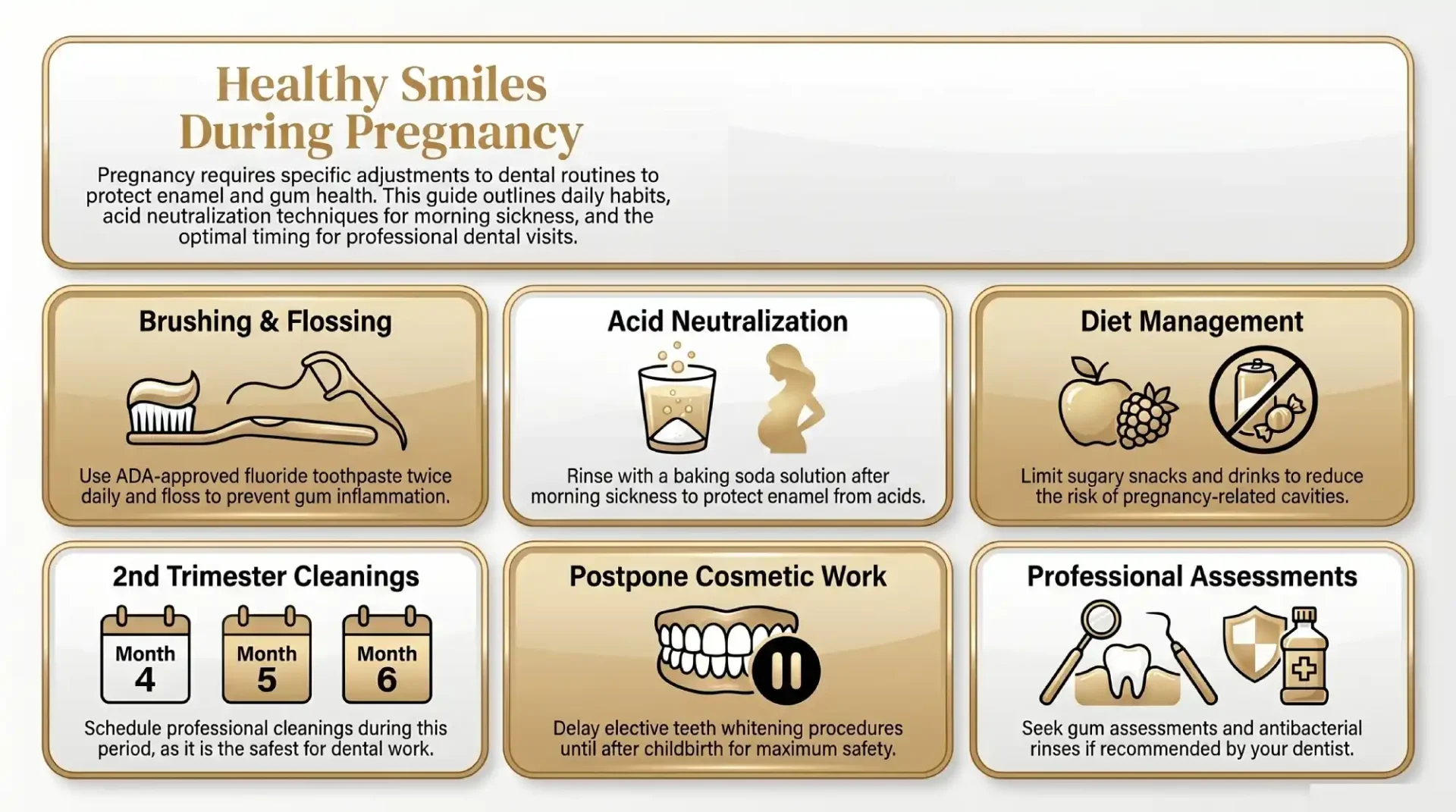
- Brushing twice daily with ADA-approved fluoride toothpaste to strengthen enamel.
- Flossing daily to remove plaque and prevent gum inflammation.
- Diet management, limiting sugary snacks and drinks to reduce the risk of cavities.
- Neutralising acids by rinsing with a baking soda solution after vomiting from morning sickness.
- Using antibacterial mouth rinses if recommended by your dentist to prevent gum infections.
- Scheduling professional cleanings during the second trimester, which is the safest period for necessary dental work.
Parramatta Green Dental offers comprehensive prenatal dental care, including professional cleanings and gum assessments, to help maintain oral health and avoid elective cosmetic procedures. By following these recommendations, pregnant women can protect their teeth and gums, reduce the risk of pregnancy-related dental problems, and preserve a healthy smile until teeth whitening is safe after childbirth.
Professional vs. At-Home Teeth Whitening During Pregnancy
Understanding the differences between professional and at-home whitening methods is important for expectant mothers. All whitening treatments involve peroxide-based chemicals, but safety depends on concentration, supervision, and application.
In-Clinic Whitening
In-office whitening uses high concentrations of hydrogen peroxide or carbamide peroxide to achieve fast results. During pregnancy, dentists recommend delaying cosmetic whitening because hormonal changes increase gum sensitivity and enamel may be more prone to damage. Even supervised treatments are best postponed until after childbirth.
At-Home Kits
At-home whitening kits, including strips, gels, and trays, contain lower peroxide levels but carry risks during pregnancy. Unsupervised usage can irritate gums, increase tooth sensitivity, or result in accidental ingestion. Expectant mothers are advised to avoid these kits entirely.
Whitening Toothpaste
Whitening toothpaste is a safer alternative for pregnant women. It removes surface stains using mild abrasives without introducing high-concentration peroxide. Combined with brushing twice daily, flossing, and professional cleanings, it helps maintain a naturally bright smile safely during pregnancy.
Risks of Teeth Whitening During Pregnancy
Understanding potential risks helps expectant mothers make informed decisions about their dental care. Even though the exact impact of whitening agents on pregnancy is uncertain, Parramatta dentists emphasise caution due to several known and potential risks:
- Gum irritation and sensitivity: Hormonal changes during pregnancy make gums more prone to gingivitis, swelling, and bleeding. Whitening treatments can aggravate these conditions, leading to discomfort.
- Tooth sensitivity: Pregnancy itself can increase enamel sensitivity. Adding peroxide-based whitening can intensify discomfort, making it harder to chew or drink comfortably.
- Chemical exposure: Hydrogen peroxide and carbamide peroxide can be absorbed in minimal amounts. While studies are limited, exposure is not considered necessary during pregnancy, particularly for elective cosmetic purposes.
- Morning sickness complications: Reflux of stomach acid during vomiting can temporarily weaken enamel. Whitening at this time can worsen tooth erosion or irritate sensitive areas of the gums.
- Potential impact on the fetus: Although no conclusive evidence shows harm, elective cosmetic procedures offer no benefit to pregnancy health, and caution is advised.
These risks highlight why organisations such as the American Pregnancy Association (APA) and the American Dental Association (ADA) recommend postponing cosmetic dental procedures until after childbirth. Elective whitening is considered non-essential, unlike procedures for oral health maintenance.
Safe Alternatives for Maintaining a Bright Smile
While teeth whitening should be delayed, there are safe, effective ways to maintain a bright and healthy smile during pregnancy:
- Professional cleanings: Routine dental cleanings by your dentist remove surface stains, plaque, and tartar safely. This is the most effective non-bleaching method to keep teeth looking fresh.
- Whitening toothpaste: ADA-approved toothpaste with gentle abrasives can maintain whiteness without the risks associated with high-concentration peroxide.
- Diet management: Limiting foods and drinks that stain teeth, such as coffee, tea, and red wine, helps prevent discolouration. Crunchy fruits and vegetables like apples and carrots also promote natural cleaning.
- Rinsing after vomiting: For mothers experiencing morning sickness, rinsing with a baking soda solution neutralises acids and protects enamel from erosion.
- Oil pulling or natural remedies: Using coconut oil for a few minutes as a swish can reduce surface staining safely. Ingredients like bromelain in pineapple or mild citric acid in strawberries can provide gentle stain removal but should be used cautiously to avoid acidity that damages enamel.
- Regular oral hygiene: Brushing twice daily with fluoride toothpaste, daily flossing, and using a safe antibacterial mouth rinse are essential practices to maintain oral health during pregnancy.
Parramatta dentists at clinics like Parramatta Green Dental can advise on these alternatives, monitor gum and tooth health, and provide safe, customised guidance for expectant mothers. Maintaining oral health not only preserves your smile but also reduces the risk of dental complications that can affect both mother and baby.
Timing Cosmetic Whitening Treatments After Pregnancy
Once pregnancy is complete, and if you are breastfeeding or ready to resume elective treatments, teeth whitening can be safely considered. Dentists recommend waiting until postpartum to:
- Ensure hormonal levels stabilise to reduce gum sensitivity.
- Protect the baby from unnecessary exposure to bleaching agents through saliva or breast milk.
- Perform professional whitening in a controlled dental environment for maximum safety and effectiveness.
Scheduling a consultation with your Parramatta dentist allows you to determine the best timing and method for whitening based on your dental health, enamel condition, and personal cosmetic goals.
Expert Recommendations from Parramatta Dentists
Expectant mothers in Australia benefit from advice based on both international guidance and local dental expertise. Parramatta dentists recommend postponing elective teeth whitening during pregnancy, focusing instead on preventive care and safe oral hygiene. If you are considering cosmetic dental treatments, a consultation is essential. Your dentist can assess your gum health, enamel condition, and risk factors such as gingivitis, tooth erosion, or cavities, and provide advice tailored to your pregnancy stage, particularly the second trimester, which is safest for necessary dental procedures.
Dentists at Parramatta Green Dental emphasise that maintaining oral health during pregnancy is the most important step. By avoiding high-concentration bleaching agents, practising proper oral care, and attending professional cleanings, expectant mothers can protect their smile without compromising their baby’s wellbeing. These preventive measures are not just cosmetic, they reduce the risk of pregnancy-related oral complications like pyogenic granulomas and gum infections, which can have longer-term effects if left untreated.
Safe Dental Treatments During Pregnancy
Even though whitening is elective and best postponed, many dental procedures remain safe during pregnancy. Parramatta dentists follow global best practices aligned with the American Dental Association (ADA) and American Pregnancy Association (APA) recommendations:
| Procedure | Safety During Pregnancy | Notes |
| Routine check-ups & professional cleanings | Safe | Ideal in the second trimester. Helps remove stains and plaque safely. |
| X-rays | Safe with lead shielding | Only when necessary; digital X-rays minimise radiation. |
| Tooth extraction | Safe | Local anesthetics without epinephrine are preferred; second trimester is safest. |
| Root canal treatment | Safe | Performed if infection or pain occurs. |
| Orthodontic adjustments | Safe | Ongoing braces adjustments are usually fine; elective changes can wait. |
| Cosmetic teeth whitening | Not recommended | Postpone until after pregnancy and breastfeeding. |
Maintaining regular visits to your dentist ensures that any urgent dental issues are treated safely, reducing the need for more invasive procedures later. Dentists can also recommend safe alternatives, such as whitening toothpaste, professional cleanings, and careful diet management, to help you maintain a bright smile throughout pregnancy.
FAQs: Teeth Whitening and Pregnancy
Q1: Is teeth whitening safe during pregnancy?
Elective whitening treatments are generally not recommended during pregnancy due to potential risks and the lack of definitive research on fetal safety.
Q2: Can at-home whitening strips be used while pregnant?
No. Even low-concentration hydrogen peroxide or carbamide peroxide can cause gum irritation or accidental ingestion, which is best avoided.
Q3: When is it safe to whiten teeth after pregnancy?
Whitening is safest after childbirth and once breastfeeding decisions are considered. A dentist can advise the ideal timing based on enamel health and gum condition.
Q4: What are safe ways to maintain a bright smile during pregnancy?
Brushing twice daily, flossing, professional cleanings, diet control, and rinsing with a baking soda solution after vomiting are safe methods to maintain teeth whiteness.
Q5: Are there natural whitening methods safe for pregnant women?
Mild methods like coconut oil pulling, brushing with baking soda, or consuming stain-reducing fruits like pineapple and strawberries can help, but they should be used cautiously to avoid enamel damage. Always consult your dentist first.
Final Thought
While cosmetic teeth whitening is popular, Parramatta dentists recommend postponing it during pregnancy to ensure the safety of both mother and baby. Focusing on preventive care, such as professional cleanings, proper brushing, flossing, and diet management, helps maintain oral health and natural brightness without unnecessary risk.
Once pregnancy and breastfeeding are complete, a personalised whitening plan from your dentist can safely restore your desired smile. Our experienced dental team provides professional cleanings, oral health assessments, and expert advice, helping you maintain a healthy, bright smile throughout pregnancy and beyond.