
Experiencing discomfort after teeth whitening can be frustrating, especially when you are looking forward to a brighter smile. Teeth whitening sensitivity affects many patients who use in-chair whitening, at-home whitening kits, or whitening toothpaste, and can manifest as pain or discomfort when consuming hot, cold, sweet, or acidic foods. Understanding the causes of sensitivity, how to prevent it, and safe treatment strategies is crucial to enjoy a brighter smile without pain. At Parramatta Green Dental, our team helps patients in Australia safely manage whitening procedures, ensuring optimal results while protecting enamel, dentin, and gum health.
What Is Teeth Whitening Sensitivity?
Teeth whitening sensitivity is a temporary discomfort or pain experienced in the teeth and gums after whitening treatments. This sensitivity is often triggered by exposure to temperature changes, acidic foods, or direct contact with teeth after bleaching procedures. It occurs when whitening agents, such as hydrogen peroxide or carbamide peroxide, penetrate the enamel and reach the dentin layer, where nerve endings reside. The result is a heightened response from the pulp of the tooth, producing the sharp or twinging sensation commonly described as sensitivity.
Sensitivity can vary in intensity depending on the whitening method used, professional in-chair whitening, dentist-prescribed take-home kits, or over-the-counter whitening strips. Some patients may experience mild, fleeting discomfort, while others notice sensitivity that lasts for several days. Recognising that this is a common response is essential, and understanding the tooth sensitivity causes can help in prevention and management. We guide patients in selecting whitening treatments that minimise sensitivity while achieving effective results.
Why Does Whitening Cause Sensitivity?
Interaction of Whitening Agents With Tooth Structure
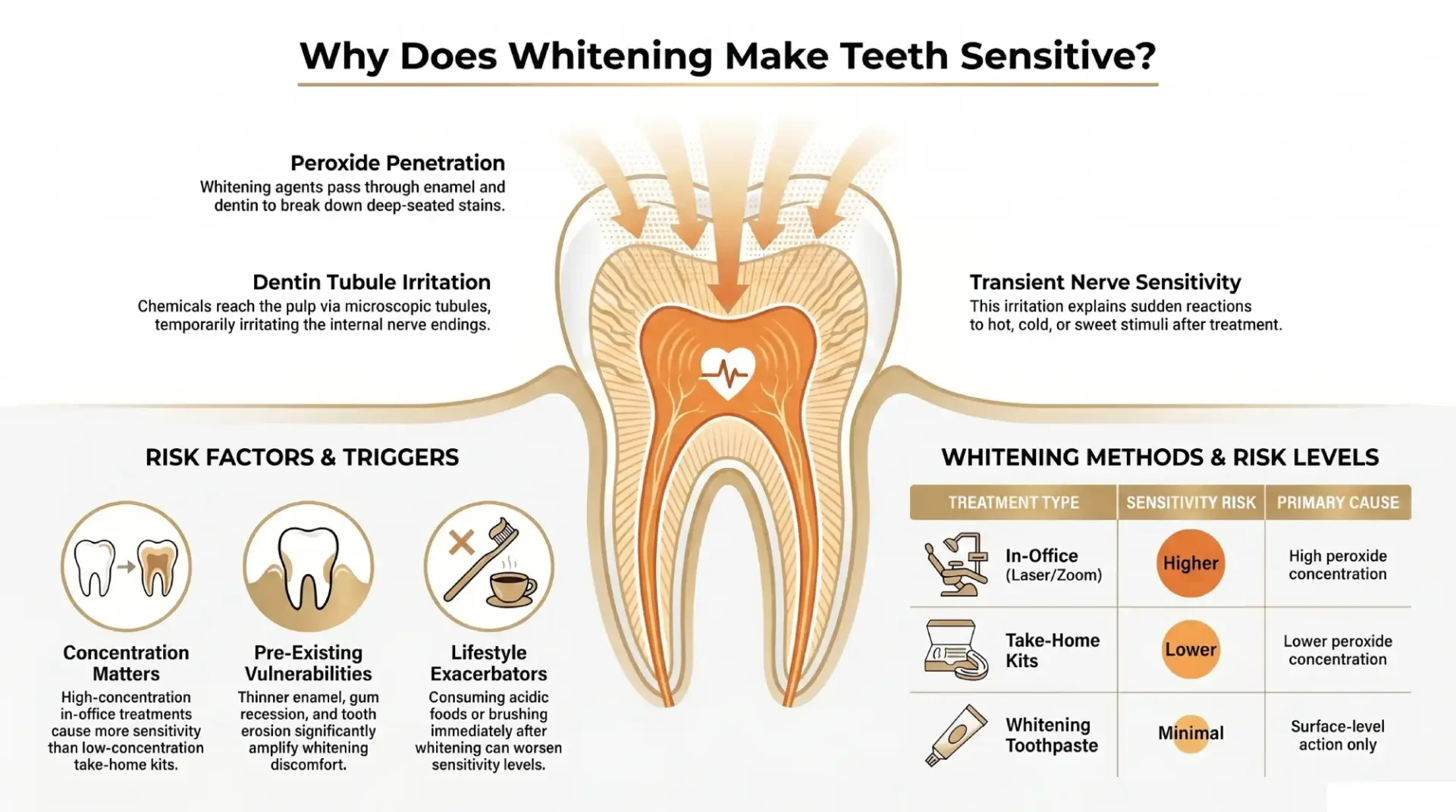
Whitening treatments rely on chemical agents such as hydrogen peroxide and carbamide peroxide to break down surface and deep stains in the enamel. When these agents penetrate the enamel and reach the dentin, they can pass through dentin tubules, temporarily irritating nerve endings in the pulp. This explains why teeth may feel sensitive to hot, cold, or sweet stimuli after whitening.
The depth of penetration depends on the concentration of the whitening agent. High-concentration in-office treatments, such as Zoom whitening or laser-assisted whitening, are more likely to cause transient sensitivity than low-concentration take-home kits or whitening toothpaste. Even though the sensitivity is generally temporary, patients with thinner enamel or gum recession may experience stronger reactions.
Pre-Existing Dental Conditions
Teeth with pre-existing conditions like enamel thinning, tooth erosion, cavities, or gum recession are more prone to sensitivity. When dentinal tubules are exposed due to these conditions, whitening agents can directly reach the nerves, amplifying discomfort. Patients with restorations, such as crowns or veneers, may also notice uneven sensitivity because bleaching agents do not affect restorative materials the same way as natural enamel.
Improper Whitening Techniques
Overuse of whitening products, improper application of at-home kits, or exceeding recommended exposure times can increase the likelihood of sensitivity. For example, using whitening strips for longer than instructed or applying high-concentration hydrogen peroxide without professional supervision can irritate gums and enamel, leading to temporary or, in rare cases, prolonged sensitivity.
Lifestyle and Dietary Factors
Consumption of acidic foods and beverages, like citrus, coffee, or carbonated drinks, can thin enamel and heighten sensitivity. Brushing immediately after consuming acidic foods or following a whitening session can also exacerbate discomfort. At Parramatta Green Dental, we educate patients on the importance of diet management, pre- and post-whitening fluoride treatments, and proper brushing techniques to reduce sensitivity risks.
Common Triggers After Whitening
After a whitening procedure, teeth can become temporarily sensitive due to the chemical action on the enamel and dentin. Common triggers include:
- Hot or cold foods and beverages: Temperature extremes stimulate the exposed nerve endings in the dentin, causing sharp twinges.
- Sweet or acidic foods: Sugary or acidic foods can irritate the teeth and worsen sensitivity.
- Brushing too soon: Brushing immediately after whitening can abrade temporarily softened enamel, increasing discomfort.
- Air exposure: Cold air, like from air conditioners or outdoor weather, may trigger brief sensitivity reactions.
Understanding these triggers helps patients take simple precautions to manage discomfort effectively. Our dentists guide patients on how to minimise exposure to these triggers post-treatment.
How Long Does Whitening Sensitivity Last?
Sensitivity after teeth whitening is usually temporary, but the duration can vary depending on treatment type and individual tooth structure:
- In-office whitening (e.g., Zoom whitening or laser whitening) may cause sensitivity for 1–3 days, occasionally up to a week.
- At-home kits with lower peroxide concentrations often result in milder sensitivity, typically lasting 1–2 days.
- Factors that extend sensitivity include thin enamel, gum recession, pre-existing cavities, or overuse of whitening products.
Most patients experience gradual relief with proper post-treatment care. Persistent pain lasting more than a week should be evaluated by a dentist to rule out underlying dental issues.
Immediate Relief for Whitening Sensitivity
When sensitivity occurs, there are several safe and effective strategies to relieve discomfort:
Desensitising Toothpaste
Toothpaste containing potassium nitrate or fluoride helps block the dentin tubules, reducing nerve stimulation. Brushing twice daily with these products is an effective first step for mild sensitivity.
Fluoride Gels and Varnishes
Applying fluoride varnish or gel strengthens enamel and reduces post-whitening sensitivity. These are available both over-the-counter and through professional dental application.
Professional Interventions
Dentists can apply desensitising gels, protective coatings, or custom-fit whitening trays to minimise discomfort during treatment. These interventions are particularly helpful for patients undergoing in-chair whitening or repeated at-home sessions.
Preventing Sensitivity Before Whitening
Prevention is key to enjoying whitening with minimal discomfort. Recommended strategies include:
- Professional Dental Evaluation: A pre-whitening check helps identify issues like gum recession, cavities, or enamel thinning, which can increase sensitivity.
- Adjust Whitening Techniques: Using lower peroxide concentrations, shorter application times, or barrier gels reduces the risk of irritation.
- Pre-treatment Conditioning: Brushing with desensitising toothpaste for 2–4 weeks before whitening helps prepare the enamel and dentin.
- Lifestyle Considerations: Limiting acidic foods and beverages prior to whitening can protect enamel from overexposure and reduce sensitivity.
We provides customised whitening plans to minimise sensitivity while delivering safe, effective results. Patients can also benefit from professional guidance on tray usage, bleaching frequency, and post-treatment care to ensure lasting comfort.
Key Tips to Prevent and Relieve Sensitivity
| Strategy | Method | Benefit |
| Pre-treatment evaluation | Professional dental check-up | Identify risk factors like enamel thinning or gum recession |
| Desensitising toothpaste | Potassium nitrate or fluoride | Blocks dentin tubules, reduces nerve stimulation |
| Fluoride gels & varnishes | Professional or OTC application | Strengthens enamel and minimises discomfort |
| Proper whitening technique | Lower peroxide, shorter sessions | Reduces exposure to dentin and nerve endings |
| Diet & lifestyle | Avoid acidic/sugary foods, and avoid brushing immediately post-whitening | Minimises enamel irritation and sensitivity triggers |
| Professional supervision | In-chair guidance & custom trays | Ensures safe application and comfort |
Safe Teeth Whitening Options for Sensitive Teeth
For patients with tooth sensitivity, there are whitening options that reduce discomfort while delivering noticeable results. Choosing the right method depends on dental health, enamel thickness, and prior sensitivity experiences.
Professional In-Chair Whitening
In-chair whitening treatments, including options like Zoom whitening or laser-assisted whitening, are performed under a dentist’s supervision. Using controlled concentrations of hydrogen peroxide, these treatments allow for customised application, reducing the risk of gum irritation and nerve stimulation. Dentists can apply desensitising gels before and after treatment to protect dentin tubules and ensure comfort throughout the procedure.
Dentist-Prescribed Take-Home Kits
Custom take-home trays prescribed by a dentist use lower concentrations of carbamide peroxide and provide gradual whitening. The custom fit ensures that gums are protected, reducing irritation. Patients can also combine these kits with pre-treatment fluoride or desensitising toothpaste to minimise sensitivity.
Whitening Toothpaste and Gels
For mild discolouration, whitening toothpaste containing safe abrasives or desensitising agents like potassium nitrate can maintain a bright smile without causing sensitivity. These products are ideal for ongoing maintenance and can be used alongside regular professional cleanings.
Over-the-Counter Sensitive Strips
While accessible, OTC strips should be used with caution, particularly by patients prone to sensitivity. Overuse or prolonged exposure to hydrogen peroxide can cause gum irritation or temporary pulp discomfort. Professional guidance is recommended to prevent overexposure.
Alternatives That Minimise Sensitivity
Not all whitening needs to involve peroxide. Patients with high sensitivity can consider:
- Surface stain removal via professional cleanings
- Natural, safe teeth whitening methods like baking soda rinses or oil pulling with coconut oil
- Avoid acidic and staining foods to prevent discolouration
- Using fluoride varnish or gel treatments to strengthen enamel before whitening
These alternatives are safe for sensitive teeth while still maintaining oral brightness.
When to See a Dentist
Persistent or severe sensitivity may indicate underlying dental issues. Seek professional evaluation if:
- Pain lasts more than a few days after whitening
- Sensitivity occurs with normal brushing or eating, not just post-whitening
- Signs of gum irritation, cavities, or enamel damage appear
Parramatta Green Dental offers comprehensive assessments to detect hidden dental problems, apply professional desensitising treatments, and recommend safe whitening options that preserve enamel and gum health.
Frequently Asked Questions (FAQs)
Q1: Can teeth whitening permanently damage enamel?
When performed correctly under dental supervision, whitening does not cause permanent damage. Overuse or high-concentration products can increase enamel thinning and sensitivity.
Q2: Why do my teeth get more sensitive teeth after whitening?
Whitening agents penetrate the enamel and reach dentin tubules, temporarily stimulating nerve endings in the pulp.
Q3: Is professional whitening safer for sensitive teeth than at-home kits?
Yes. Professional whitening allows dentists to control chemical concentration, protect gums, and apply desensitising agents.
Q4: How can I reduce sensitivity before whitening?
Use desensitising toothpaste, fluoride treatments, and custom-fit trays recommended by a dentist to protect enamel and dentin.
Q5: Are natural whitening methods safe for sensitive teeth?
Mild options like baking soda rinses or coconut oil pulling are safe but less effective than professional treatments. Avoid acidic fruits in excess to prevent enamel erosion.
Final Verdict
Teeth whitening sensitivity is common but manageable. By choosing the right whitening method, using desensitising products, and following professional guidance, patients can maintain a bright smile without discomfort. For sensitive teeth or complex dental histories, professional assessment ensures safety and effectiveness.
At Parramatta Green Dental, our dentists provide in-chair whitening, dentist-prescribed take-home kits, and professional cleanings, alongside personalised recommendations for preventing and managing sensitivity. By combining proper oral care, preventive strategies, and professional support, you can achieve a healthy, radiant smile while protecting your enamel, dentin, and gum health.